Diagram Library
Twenty-two diagrams illustrating The Marketing Helix framework. Thin line art using orbital geometry and the framework's visual language: from the complete model to individual forces, trust mechanics, signal gravity, and the post-purchase loop. All diagrams available to download as PNG.
Framework Overview
The complete model: the customer follows a helix path through time (dashed blue). Three orbital forces: trust (purple), relevance (teal), timing (blue): rotate around them at each moment. As alignment builds, the orbits tighten. When all three converge, the customer is pulled toward a decision. Entry happens at any point, from any angle. After the decision, a post-purchase arc returns energy to the start of a new cycle.
↓ Download PNG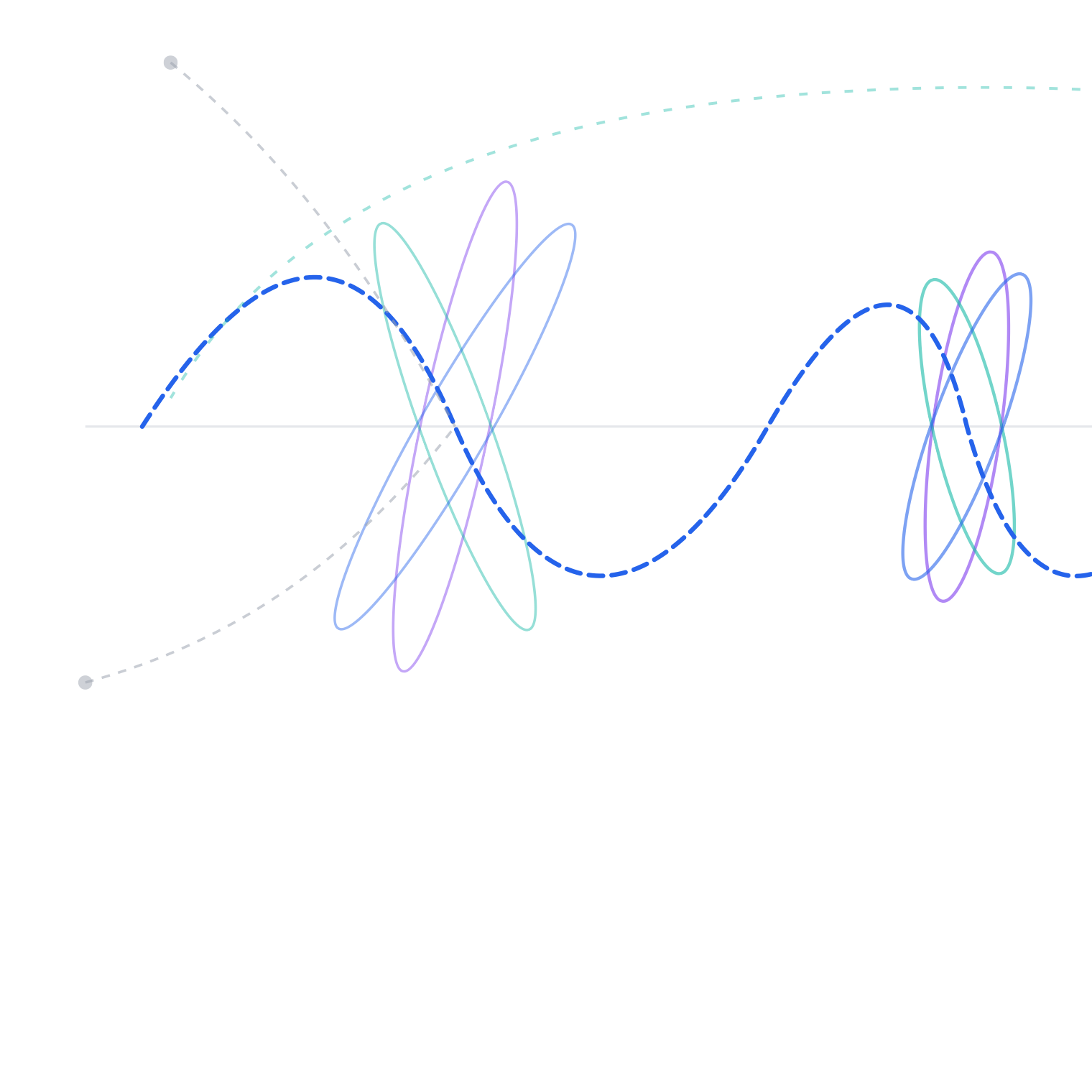
The customer is never stationary. They follow a helix path: advancing forward through time while orbiting through states of awareness, consideration, and readiness. The faded path behind shows where they have been; the dashed line ahead shows where they are going. No stage gates, no waiting rooms.
↓ Download PNG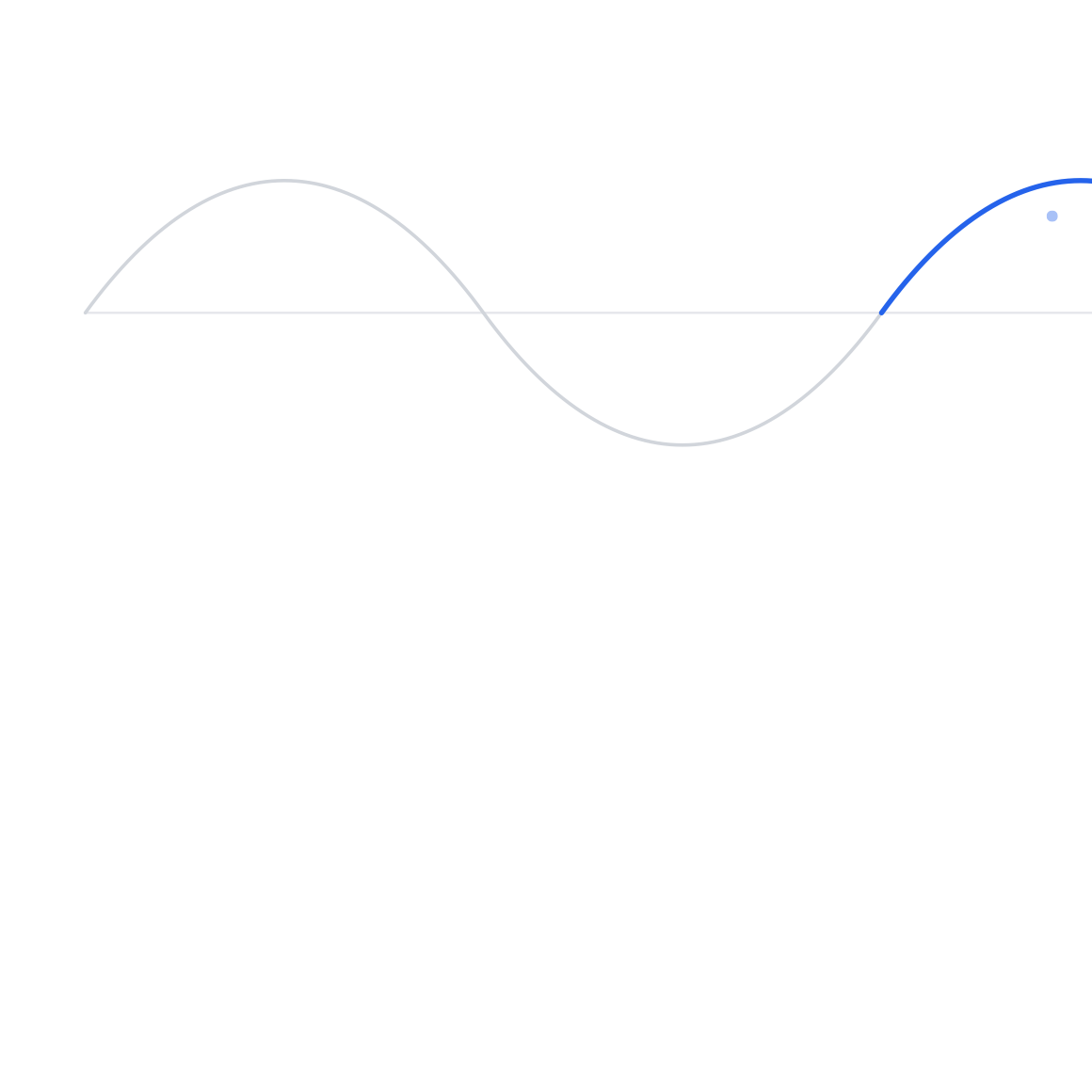
Customers do not all enter the helix at the same place or time. Some arrive through referral midway along the path. Some enter from below, having discovered the category before the brand. Some are already near the decision point. The helix has no single top: it accepts entry from any angle, at any stage.
↓ Download PNG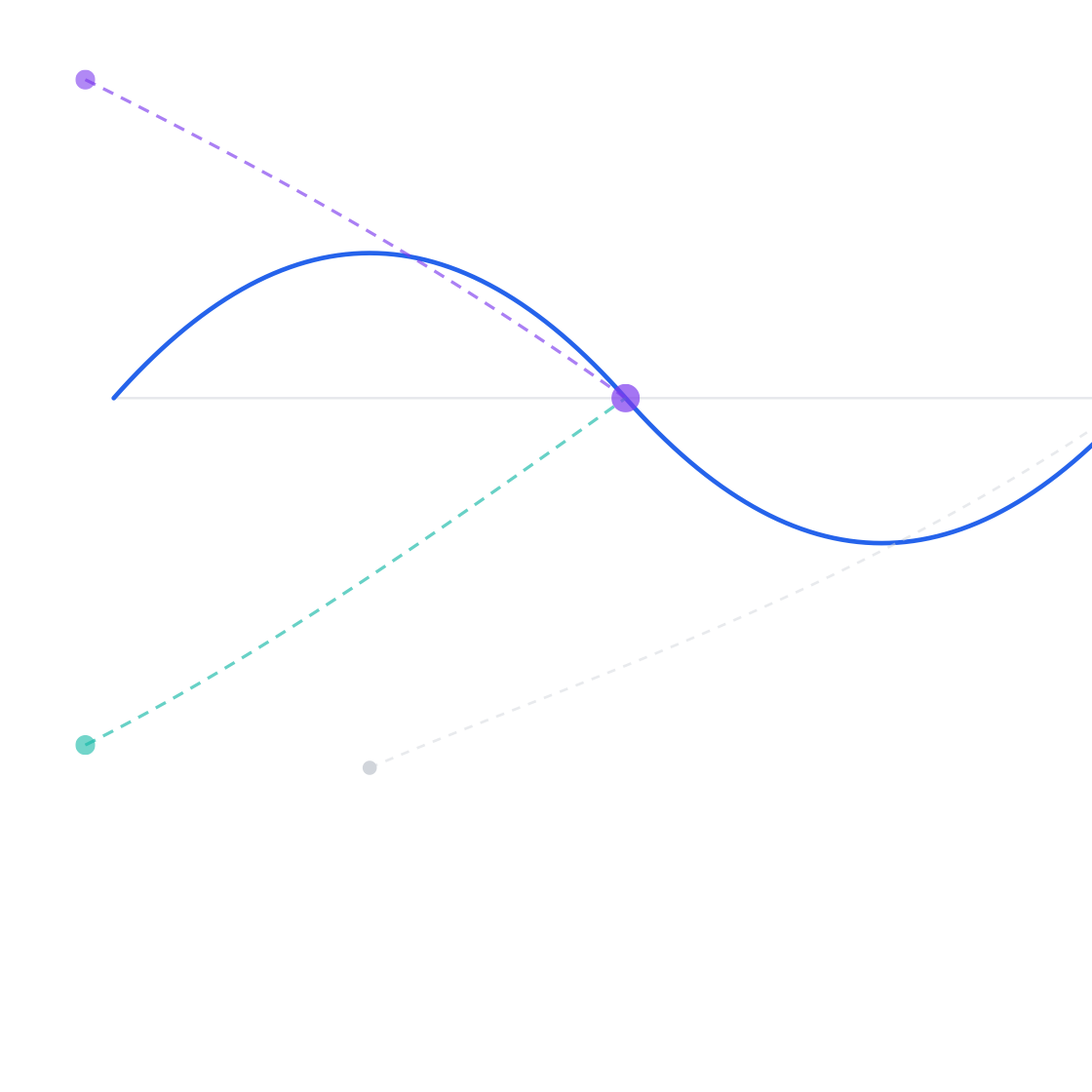
The market is not a single customer: it is many customers on different orbits, all moving simultaneously. Some are far out (gray, early orbit), some are approaching (blue), some are nearly in alignment (purple). Marketing is not a campaign aimed at one stage; it is a field condition maintained across all orbits at once.
↓ Download PNG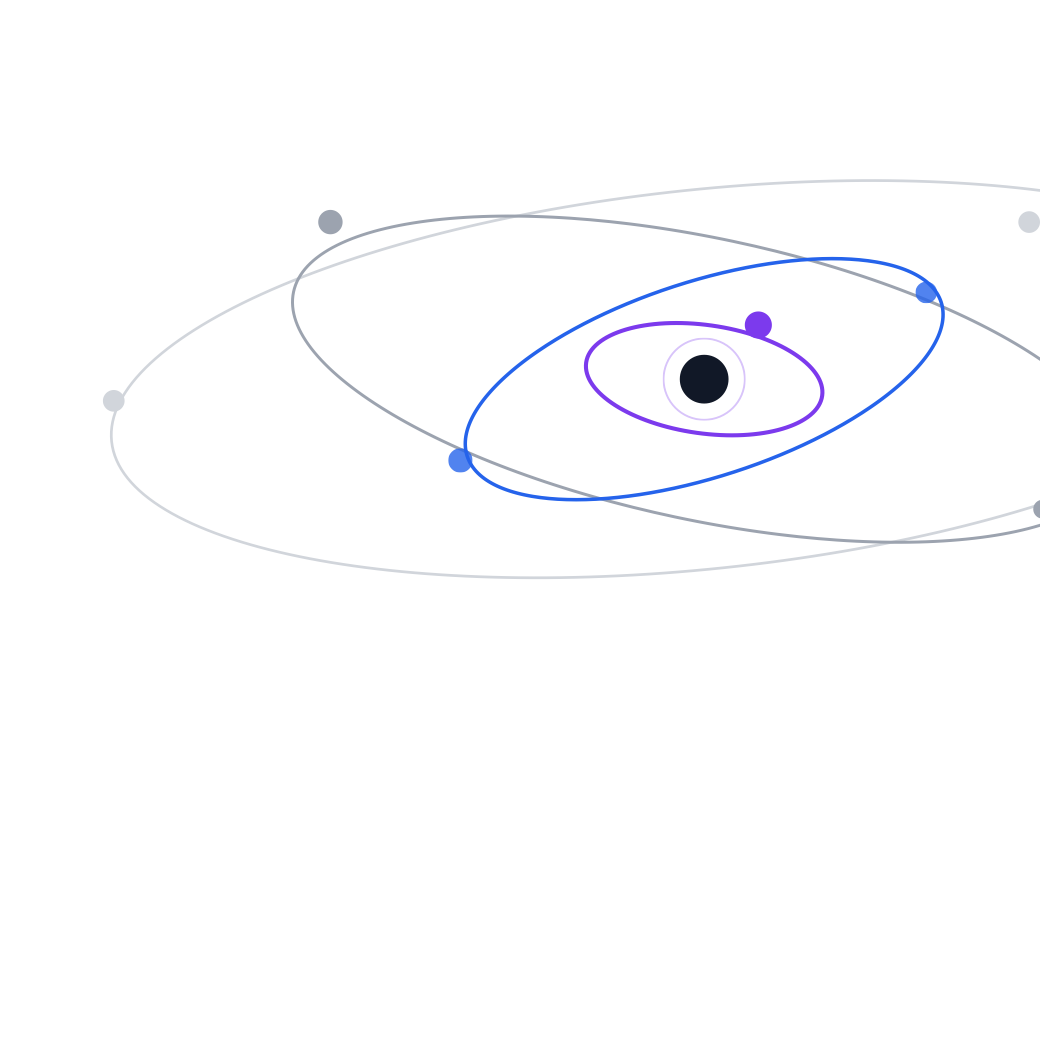
The Three Forces
Three orbital forces rotate around the customer at their center. Trust (purple), Relevance (teal), and Timing (blue) each occupy their own plane. When all three orbital bodies are simultaneously near the customer, signal gravity occurs. They rarely align by accident: alignment follows from accumulated credibility and consistent presence.
↓ Download PNG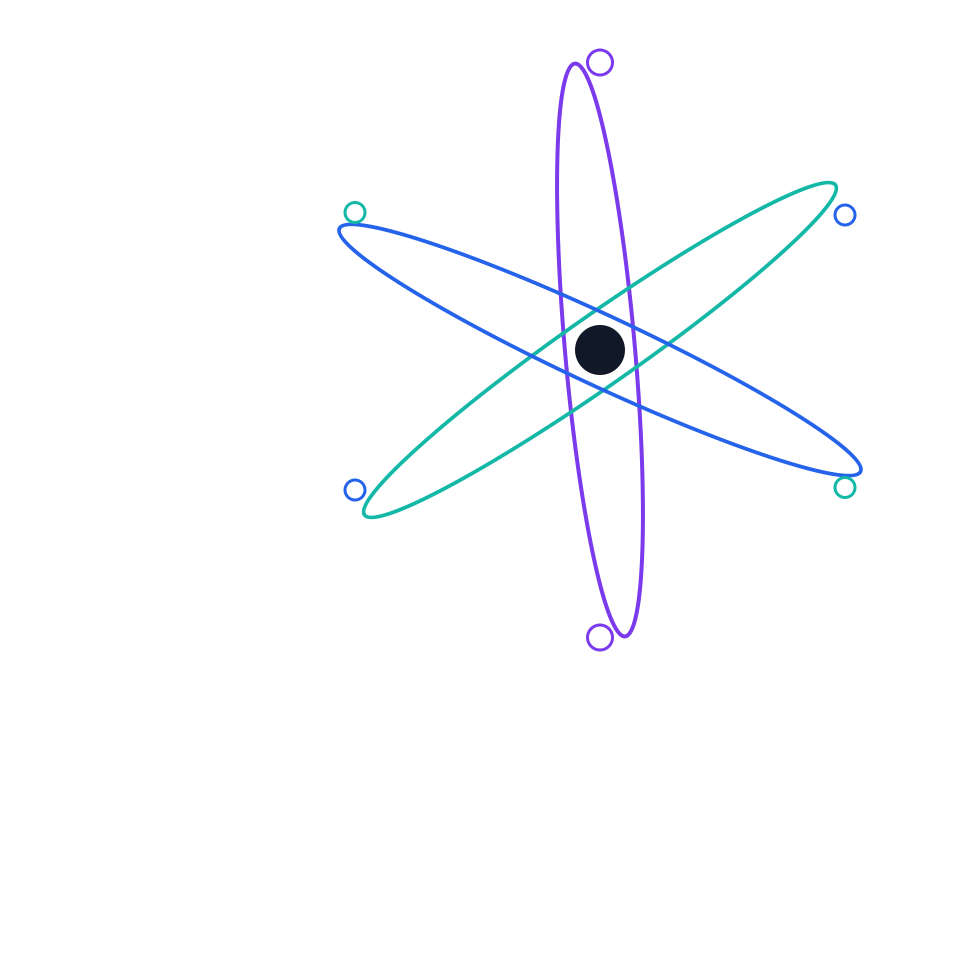
Trust, Relevance, and Timing begin as separate forces. Each follows its own path. As they converge: when the brand has built credibility, the message fits the customer's current decision state, and the moment of readiness arrives: they meet at a single point. That convergence is the pull.
↓ Download PNG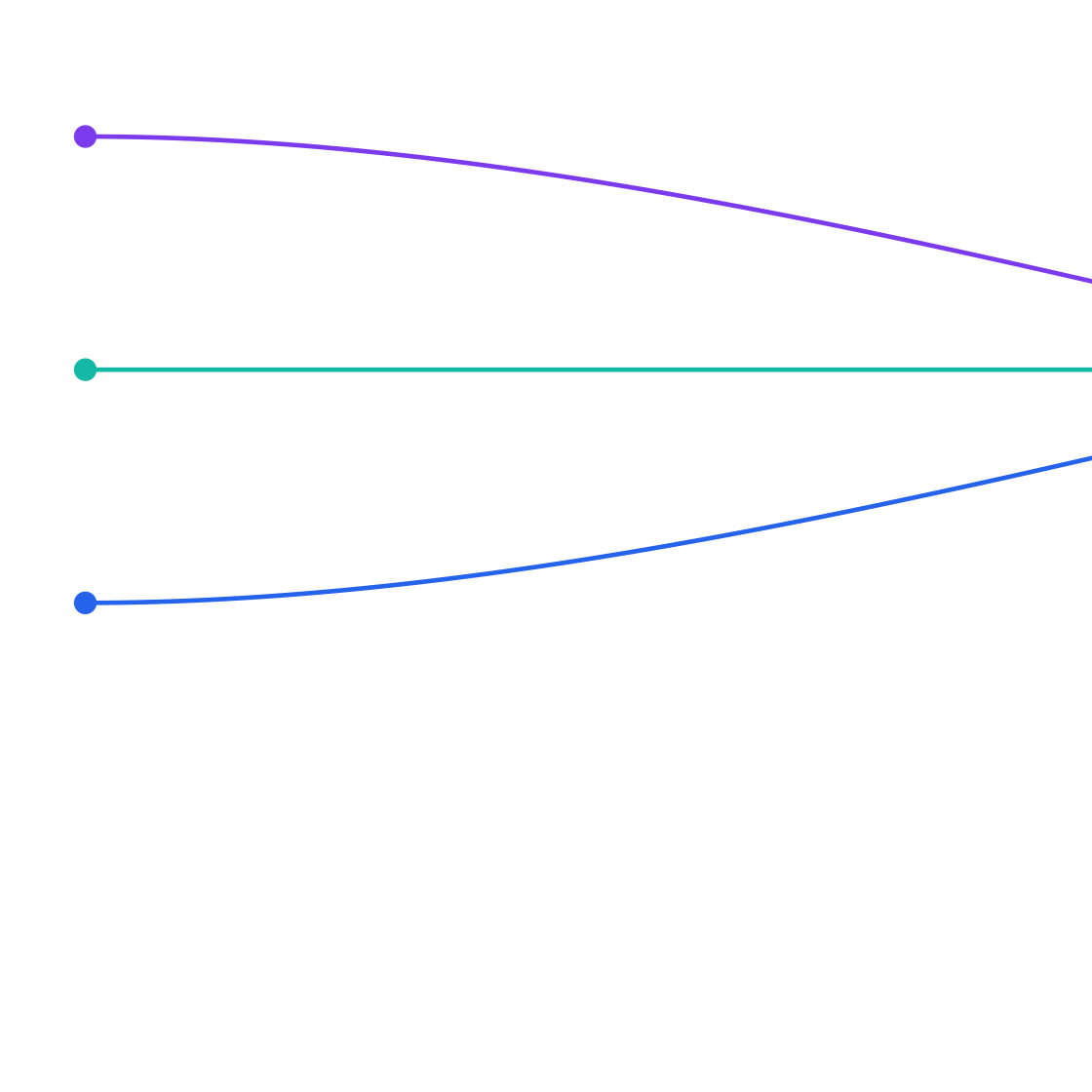
Signal Gravity
Left: push marketing radiates outward from the brand: broadcast, undirected, indifferent to where the customer is. Right: pull bends the customer's path inward: the accumulated credibility creates the pull, not the message. Same energy, opposite direction, different structural outcomes.
↓ Download PNG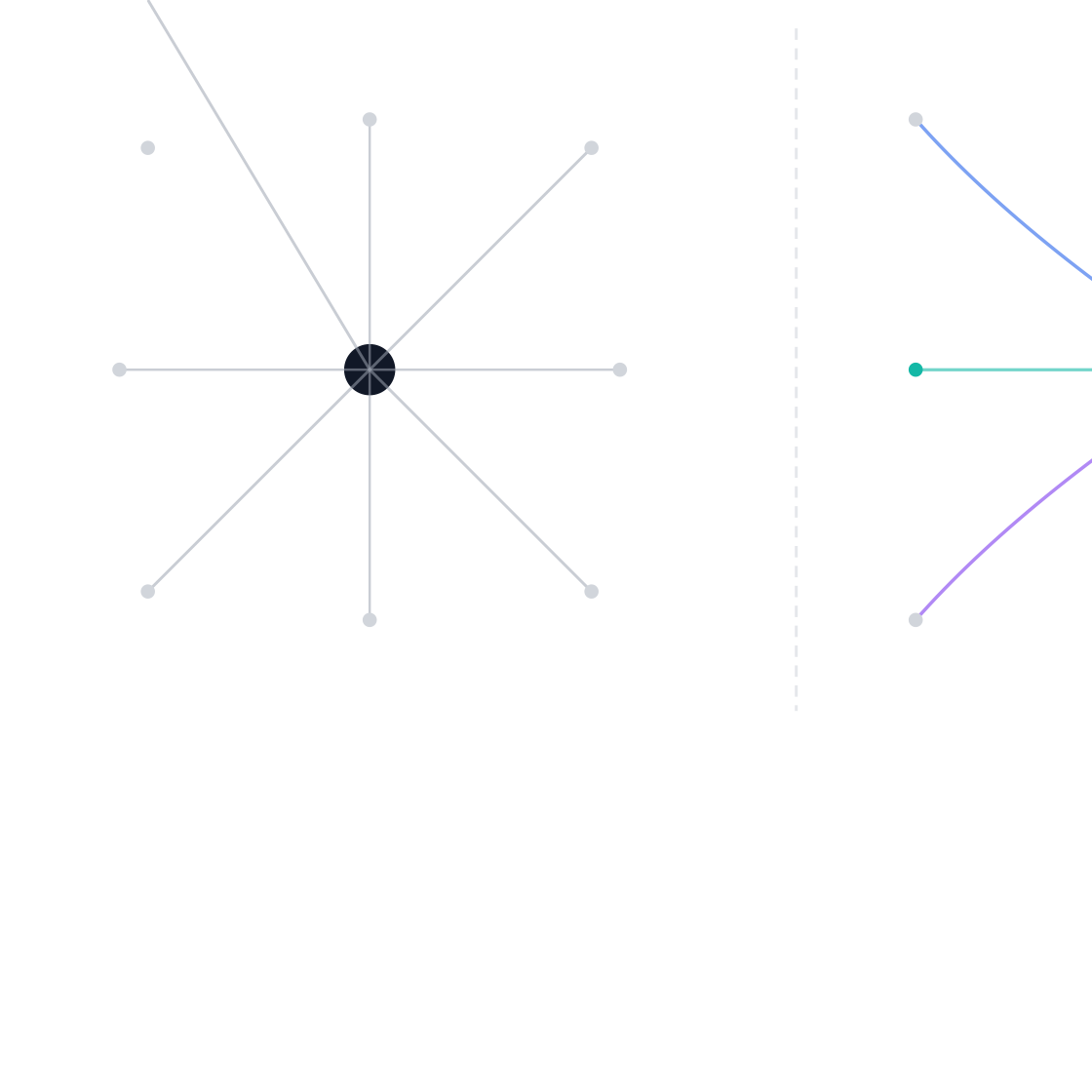
Lines arrive undisturbed from the left, then curve toward the gravity center. Color shifts from gray to blue to purple as they approach. The pull is generated by the mass: not the message. A brand with enough accumulated credibility does not need to push; alignment approaches of its own accord, for as long as that credibility holds.
↓ Download PNG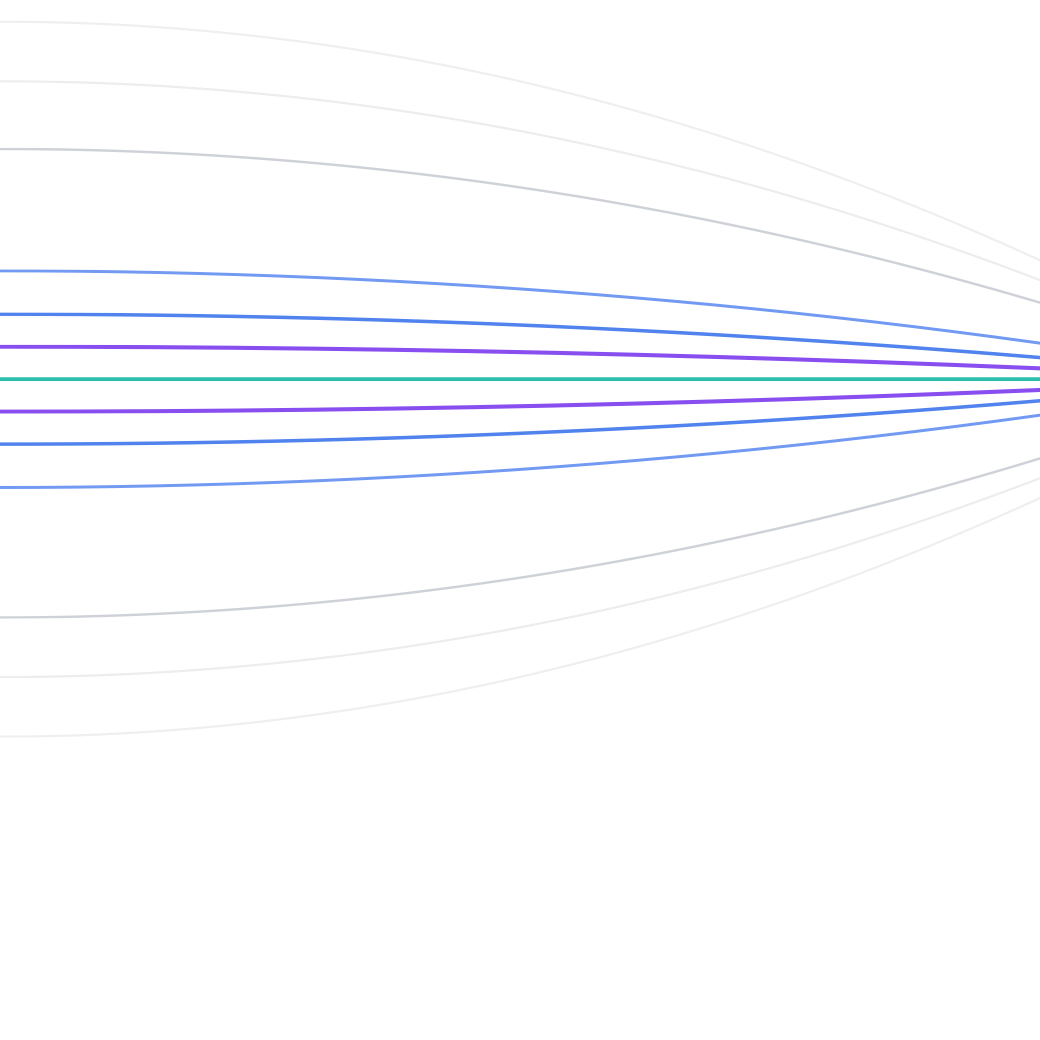
A perspective view of the gravity well: rings widening outward from the decision point at the base. Customers enter from the wide rim and are drawn inward as alignment deepens. The well is not built by the marketer on command; it forms where trust, relevance, and timing have accumulated mass over time.
↓ Download PNG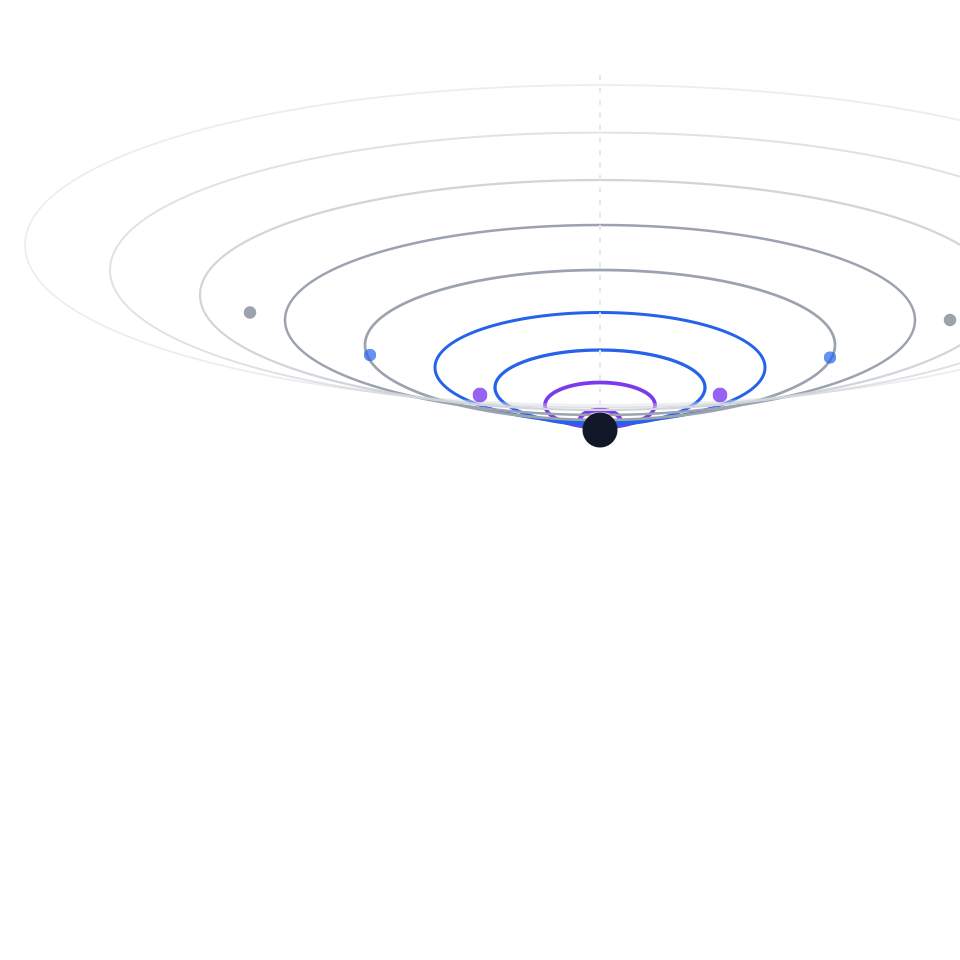
Trust
Each trust-building interaction is an arc that rises higher than the last. The baseline stays fixed: time moves forward: but the peak of each orbit climbs. The curve connecting the peaks steepens while the signals hold, and turns down when they are contradicted or allowed to age. Trust builds on trust. Early investment in authority pays disproportionate returns over time.
↓ Download PNG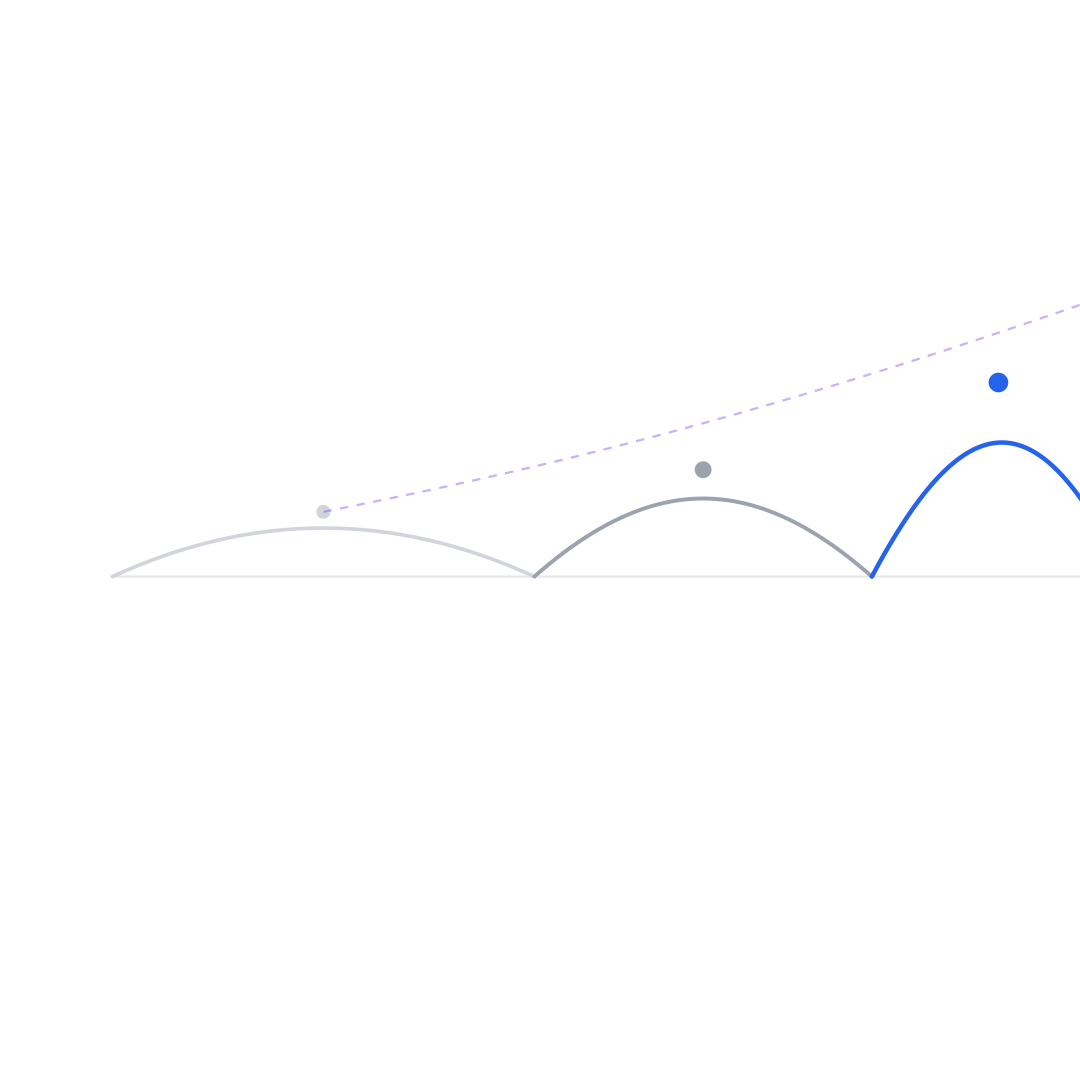
As trust builds over time, the customer's orbit contracts. Early orbits are wide and slow: the customer is far from a decision. Each positive aligned signal pulls the orbit tighter, until the path converges on the decision point. The envelope lines show the narrowing range of motion as alignment probability increases.
↓ Download PNG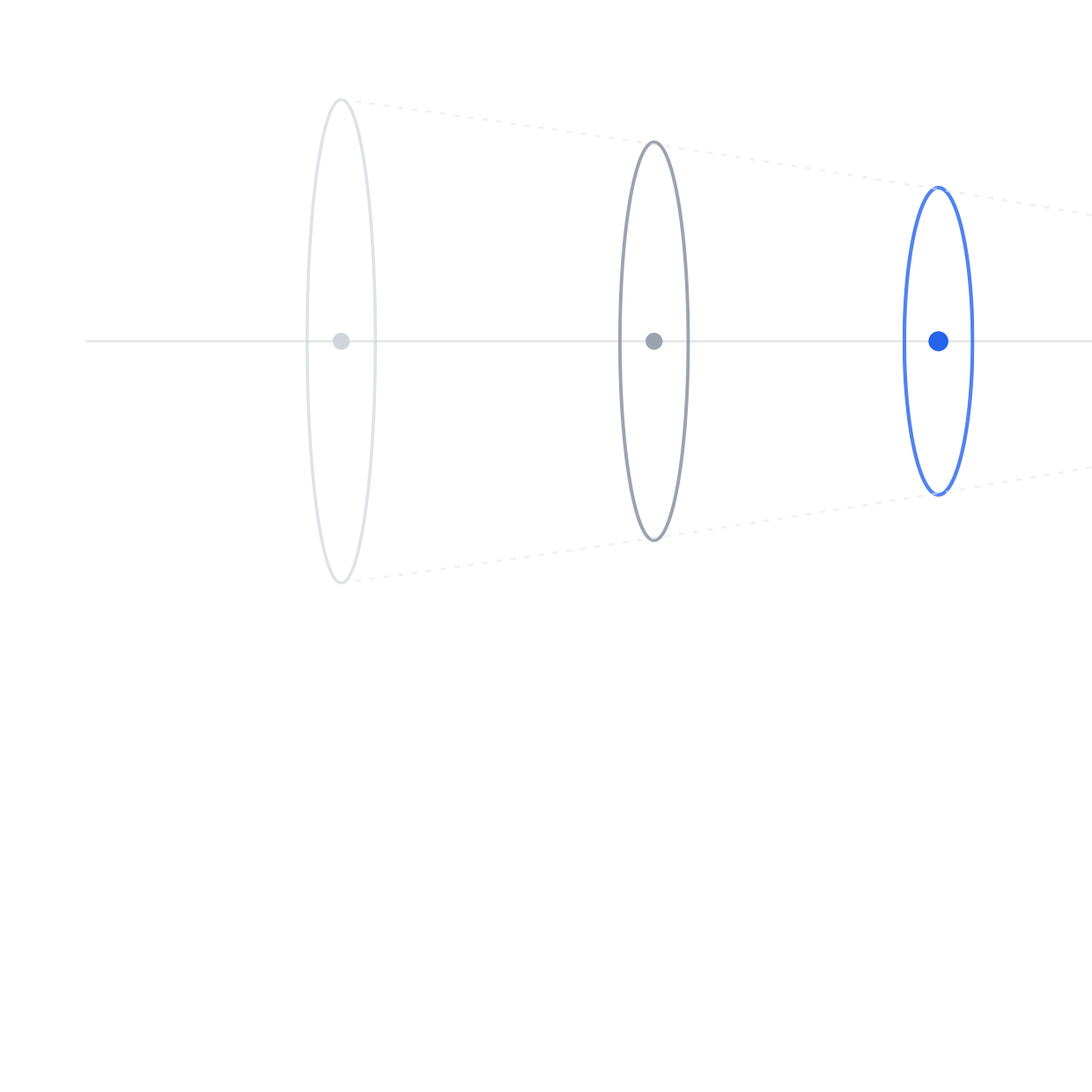
Without reinforcement, trust decays. The orbit expands over time: the customer drifts further from the decision. The color fades from purple to gray. What was built through compounding interactions can be lost through silence. Trust is not a permanent asset; it requires maintenance. Silence is not neutral: it is erosion.
↓ Download PNG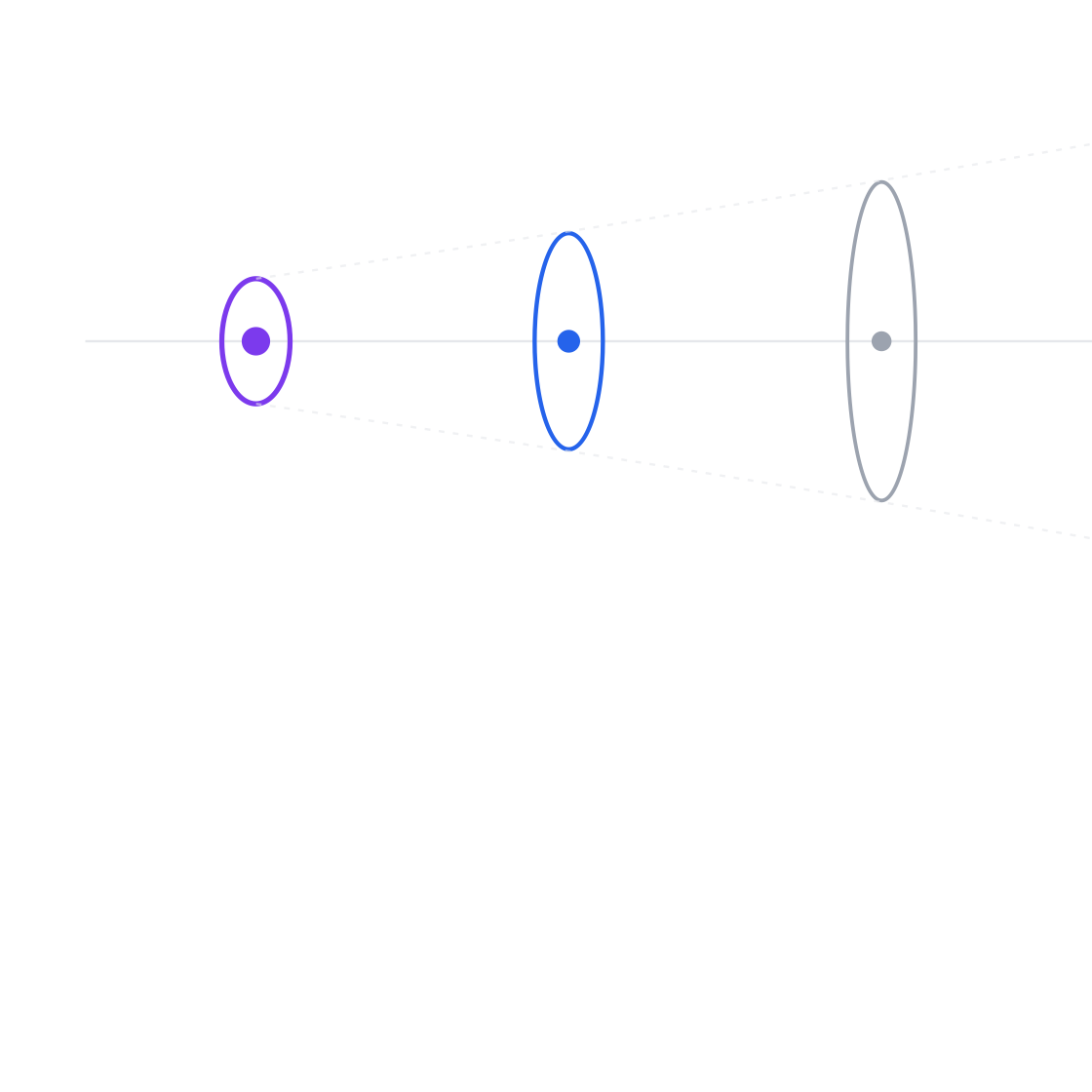
Trust is the first force: the gate through which a message must pass before relevance or timing can operate. Each interaction builds an orbit that tightens over time. Gray to purple: the orbital progression from low trust to high. The gravity dot at right is the decision point approached by accumulated credibility, not by push.
→ Read: Trust in depthTiming
The customer's readiness rises to a peak, then falls. The window is not permanent. A message that arrives too early (left marker) or too late (right marker) misses the curve entirely: even if the message itself is correct. Only the message that arrives within the window intersects with actual readiness. Timing is not a tactic; it is a structural requirement of alignment.
↓ Download PNG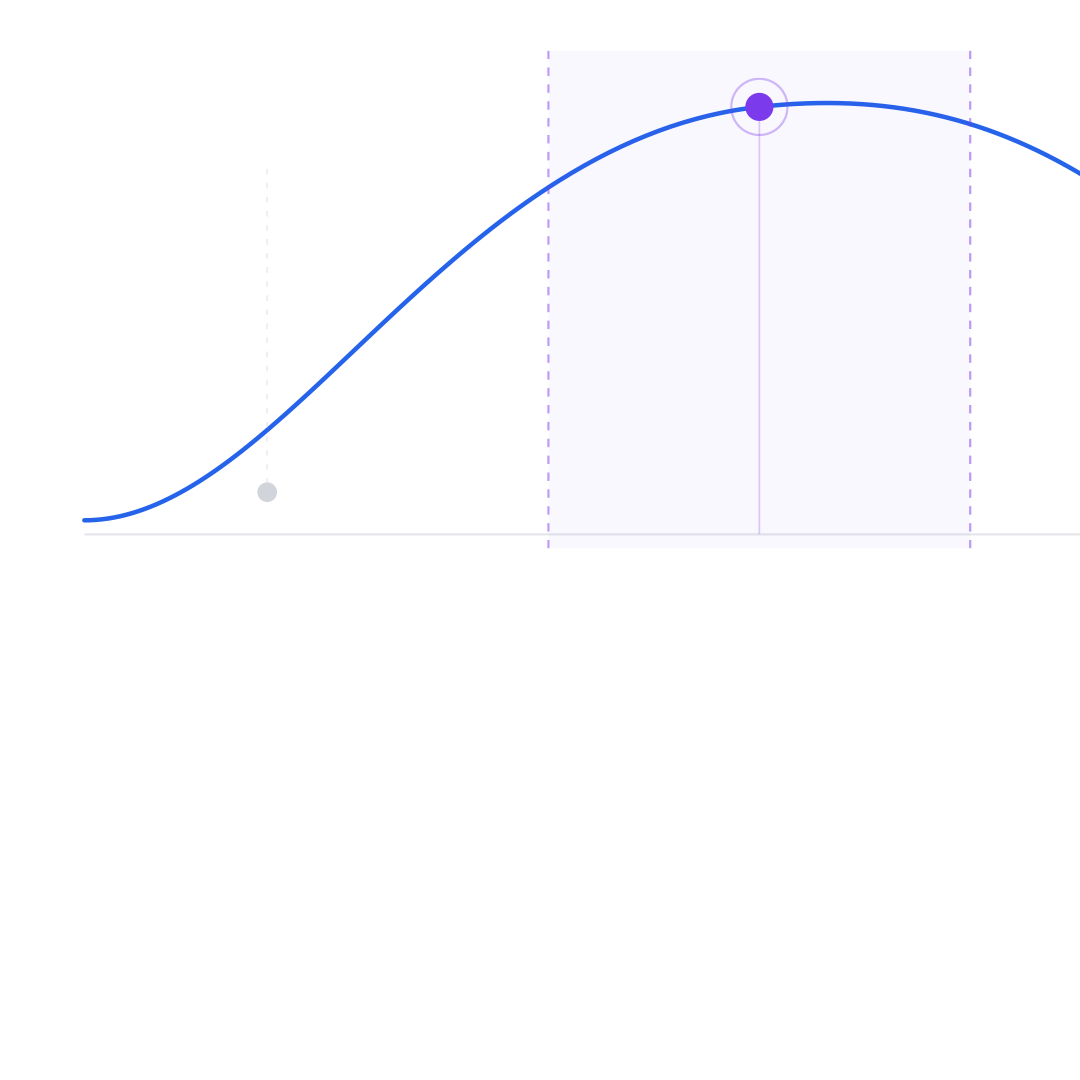
Timing determines whether trust and relevance converge at the moment the customer is ready to act. Customer readiness rises, peaks, and falls. The window: bounded by purple dashed markers: is the interval of active decision state. Messages outside it do not produce selection. Gray dots at left and right represent early and late arrivals that miss the curve entirely.
→ Read: Timing in depthRelevance
Relevance is not about the message alone: it is about the overlap between the customer's current context (outer zones) and the message's fit (inner zones). The purple center is the intersection of all context fields. A message is relevant only when it lands inside that overlap. The overlap is dynamic; it changes as the customer moves through their consideration.
↓ Download PNG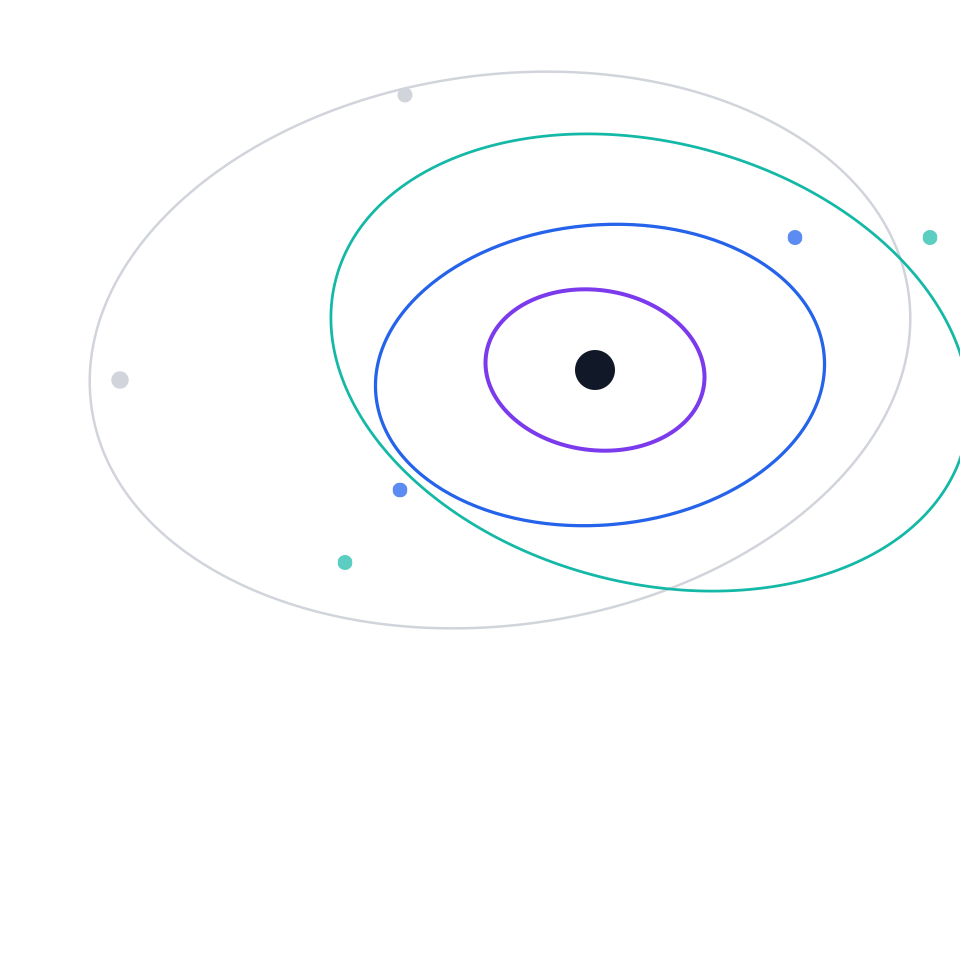
Left: particles with no shared orientation: each signal travels its own direction, no convergence occurs. Right: particles with trajectories aligned toward a gravity center: the same energy, directed. Relevance is the act of orienting the message toward where the customer actually is, not toward what the brand wants to say.
↓ Download PNG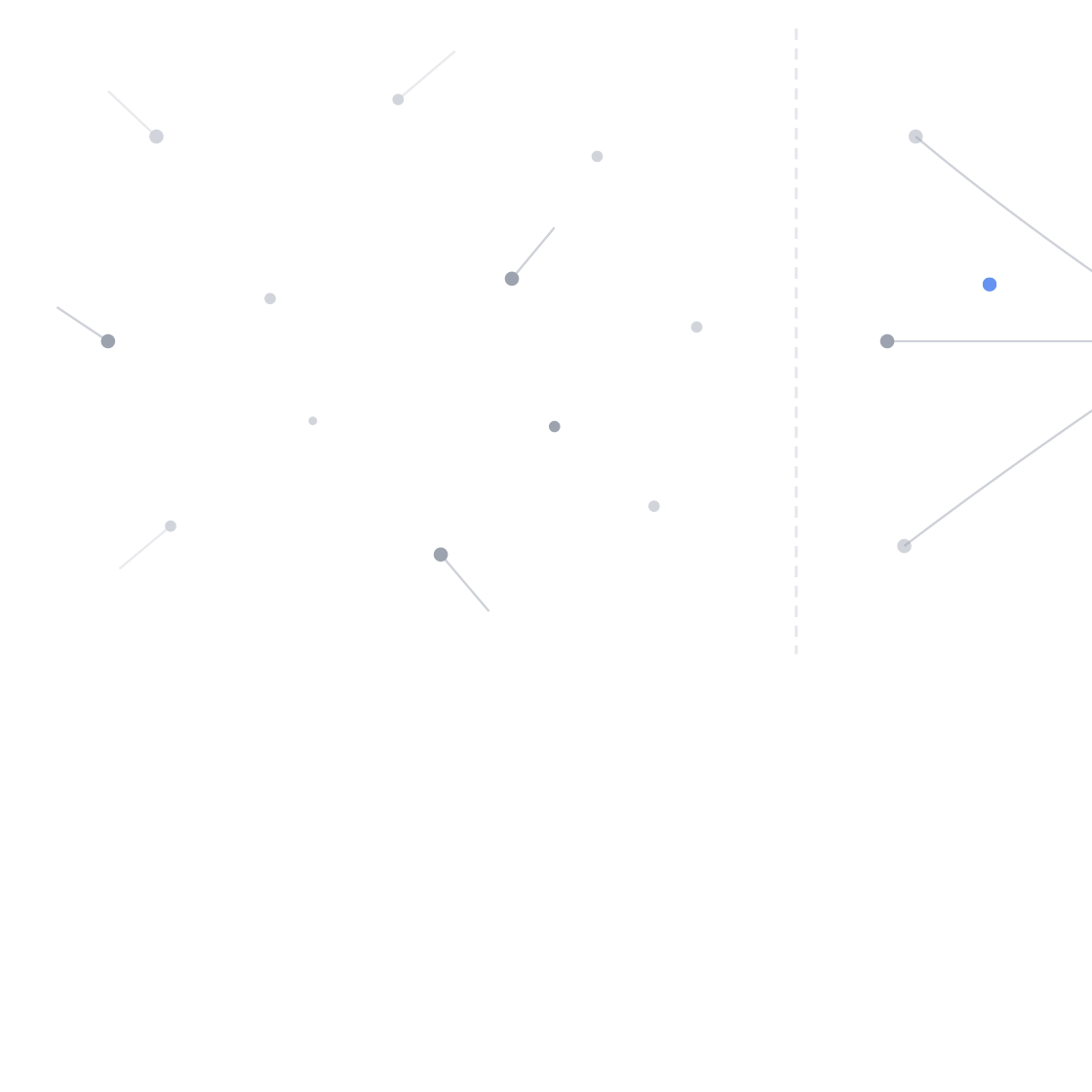
A well-directed signal (blue) travels a clean path toward its destination. But competing signals: inconsistent messaging, irrelevant content, mismatched context: cross its path and create interference. At each intersection, clarity is reduced. The signal arrives weaker. Relevance is not just about what is said; it is about the absence of noise that dilutes it.
↓ Download PNG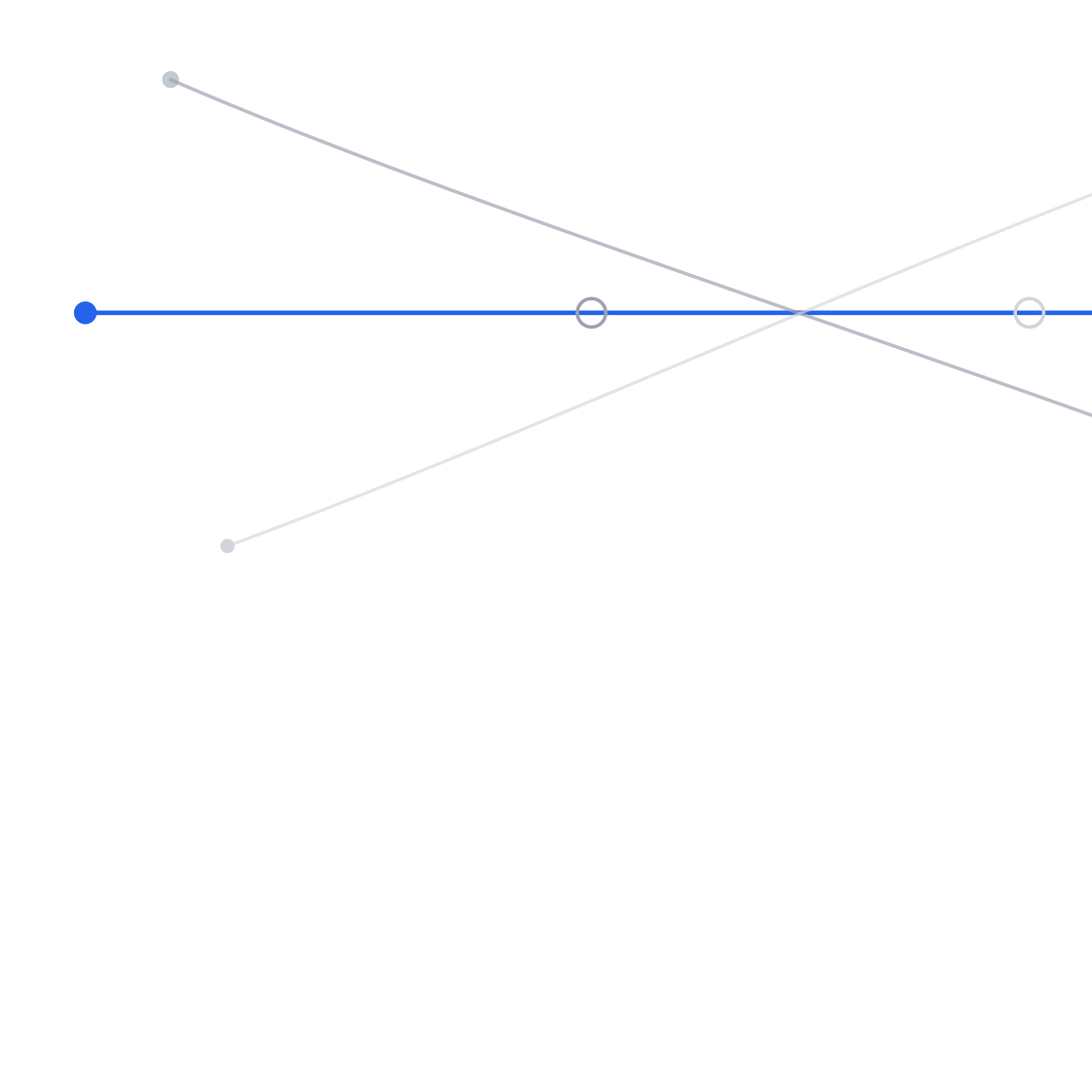
Relevance is a relational property: not a quality of the message alone, but of the fit between message context and the customer's current decision state. The customer is at center. Outer rings are broader contextual zones the message may occupy. A message achieves relevance only when its context intersects the innermost ring: the customer's active consideration state.
→ Read: Relevance in depthHelix vs. Funnel
The funnel assumes customers enter at the top and fall through stages: awareness, consideration, decision, purchase. Each stage filters out more. The model is linear, sequential, and controlled by the marketer. Most customers never reach the bottom. There is no mechanism for non-linear entry, trust accumulation, or post-purchase re-entry.
↓ Download PNG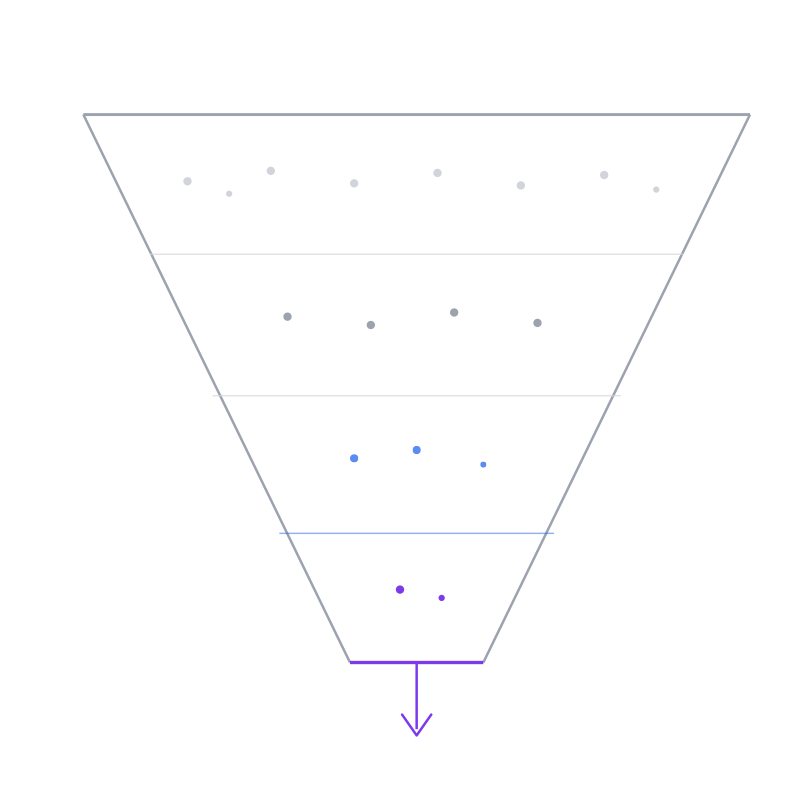
Post-Purchase
After the decision, the customer does not disappear. The lower arc (teal, dashed) returns advocacy energy back to the entry point: where it raises the ambient trust level for new customers not yet reached by direct brand activity. The loop is not a second purchase path; it is a trust injection that strengthens the conditions for the next customer's alignment.
↓ Download PNG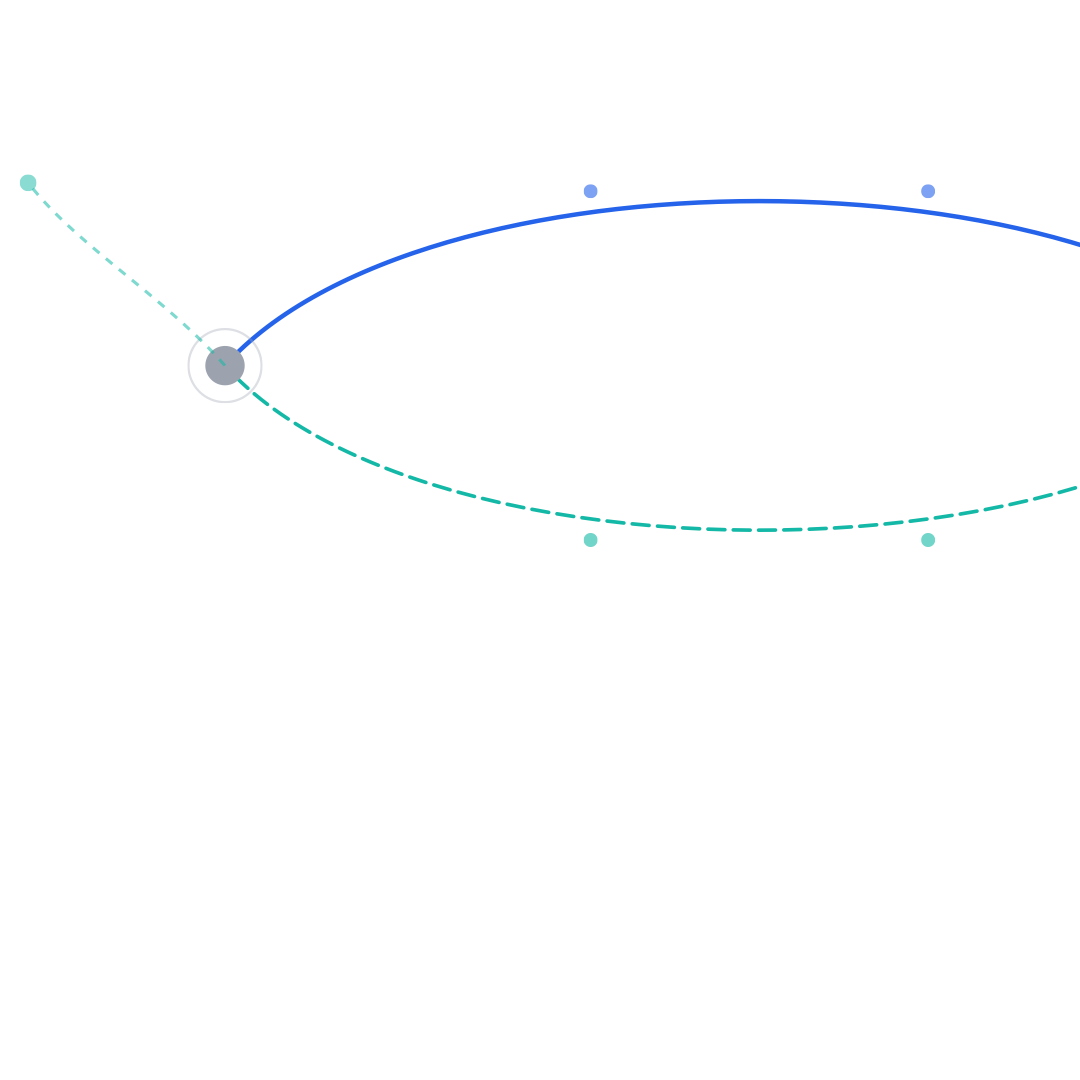
Momentum is visible in the trail. Dots grow larger and shift from gray to purple as the customer moves toward alignment. The orbit is not circular repetition: it is a directed path, and its direction can reverse. Each interaction adds energy to the trail. A retained customer moves faster through the next alignment cycle than a first-time prospect.
↓ Download PNG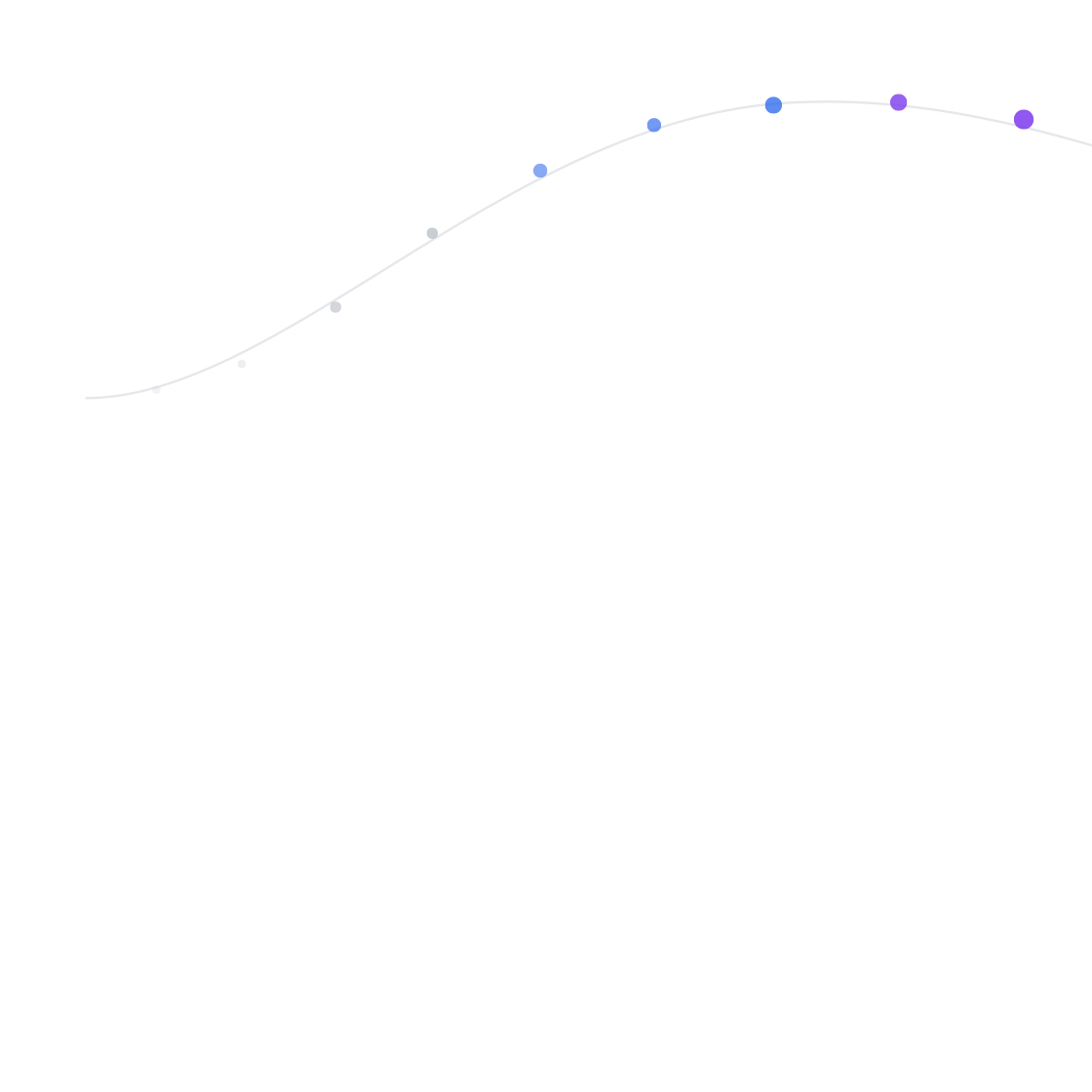
The customer's path begins as a wide, slow orbit and tightens with every trusted, relevant signal until it converges on the decision point. Movement, not stages: the brand adapts as the customer moves, and alignment follows while trust and relevance hold. The same path widens again when they weaken.
↓ Download SVG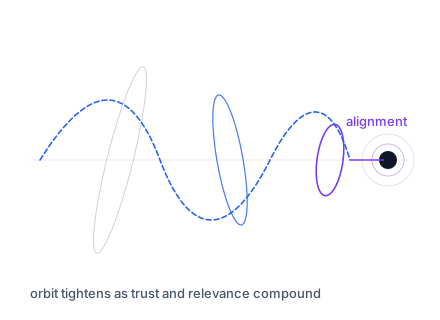
All diagrams use the site palette: #111827 · #2563EB · #7C3AED · #14B8A6 · #9CA3AF · #D1D5DB
Inline SVG: each diagram embeds directly in any page. PNG downloads at 2x retina resolution.