Chapters
- All that marketing
- The customer is already moving
- Marketing is there
- More messages, not more attention
- Noticed
- What can earn that look
- Noticed is not chosen
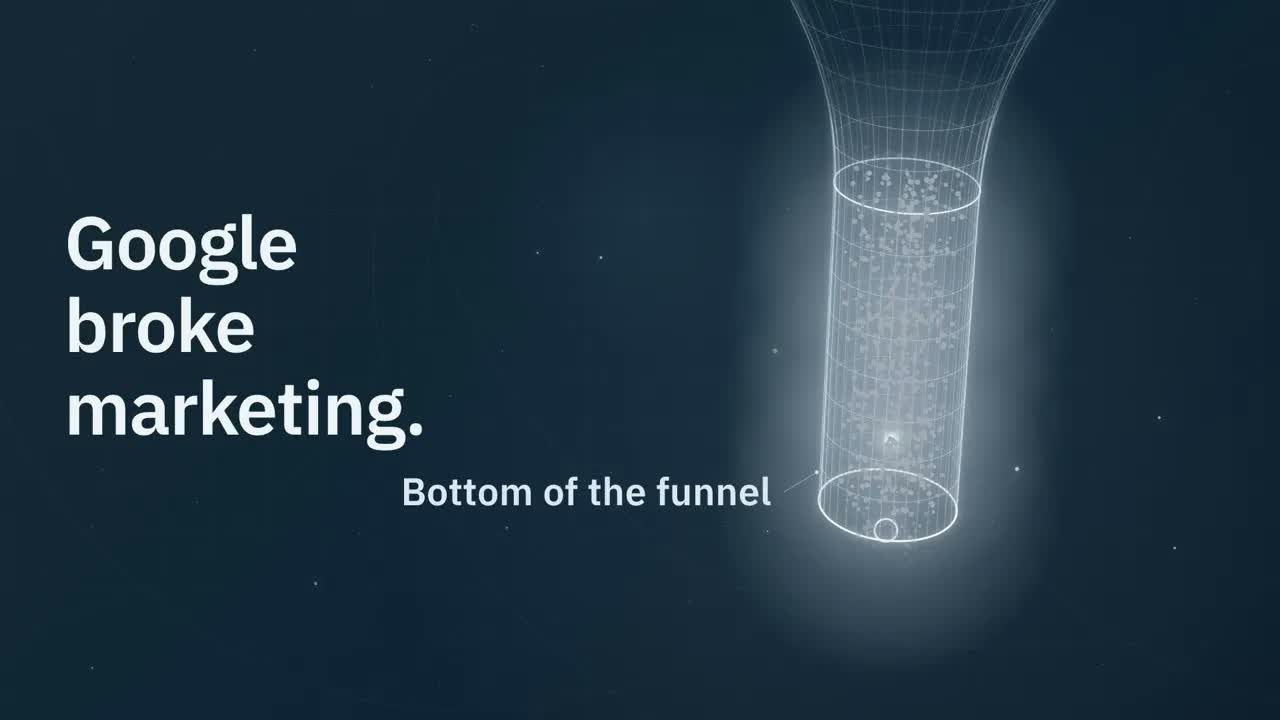
The customer is already moving before any message arrives
The film opens where the model opens: with a customer who is already in motion. Searching, comparing, deciding, talking with people they know. None of this waits for a company to make contact. By the time a message is placed anywhere, the customer has a situation, a set of questions, and a limited amount of attention to spend on all of it.
Marketing is there, around that customer. Paid placements, search results, social posts, email, reviews, referrals, press: the messages are in the places the customer passes. In the model this is a principle in its own right, and it comes before attention. A message that is not around the customer has no chance of being noticed at all. Being there is the condition that makes the next step possible.
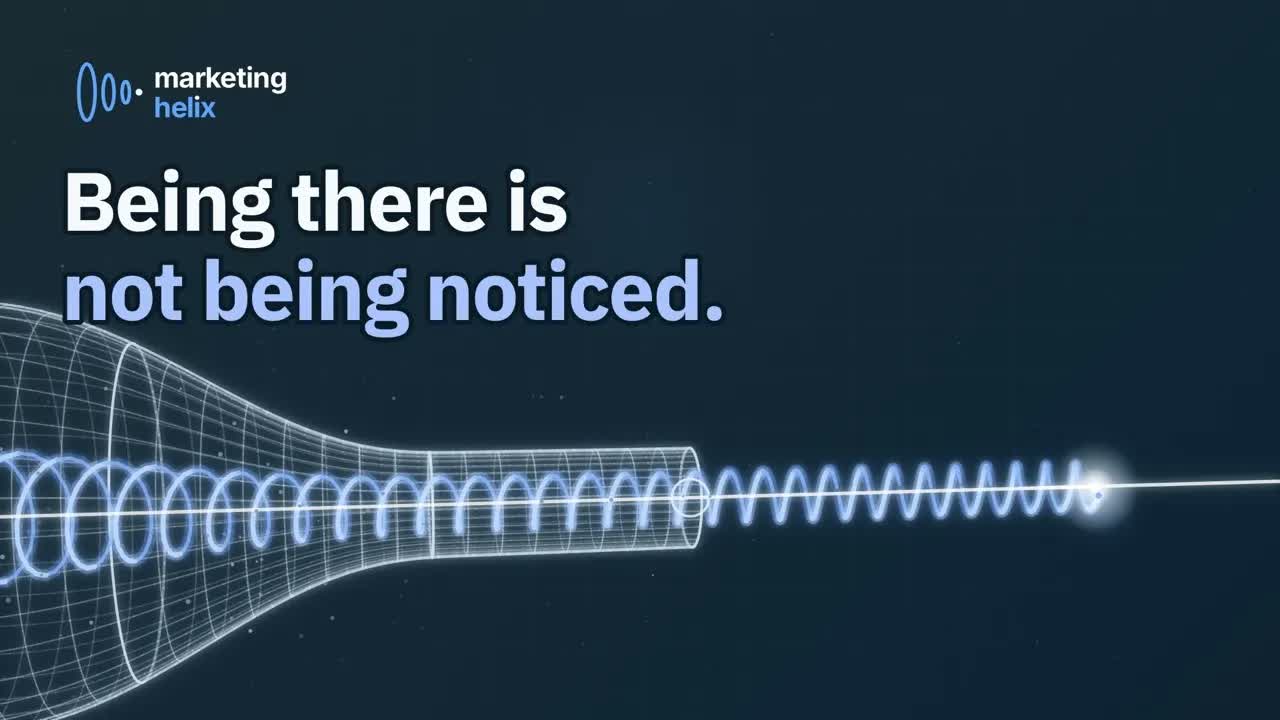
The film then draws the line the whole part depends on. Being there is not being noticed. A message can be delivered, placed, and seen in passing, and still never register with the customer. From the customer's side nothing has happened. The message was present, and it was not taken in.
More messages does not mean more attention
When nothing is noticed, the usual response is to put out more. The film shows what that looks like from the customer's position. Ads. Search. Social. Email. Nothing. Then video, reviews, referrals, press. Still nothing. The company makes more, and the customer never turns. Making a hundred videos does not mean anyone sees them.
The point is not that volume is wrong. It is that volume and attention are two different quantities, and the first does not produce the second. A customer in motion is occupied with their own life, and most of what passes them is never noticed. That is the ordinary case for marketing, not a failure of any one message. The model's own principle says it plainly: many messages are never seen, and others are noticed and then dismissed.
The route does not change this either. Paid, earned, and organic deliver different things, and the film says so later, but none of them is attention until the customer looks. A placement that was bought, a review that was earned, and a page that ranks are all messages that were put where the customer could see them. Whether the customer did see them is a separate event.
The moment a message is noticed
Then something shakes the customer. It gets their attention. It hooks them. That is the moment the film is about, and it is drawn as the one point where a passing message comes down to the customer's own line. Out of everything streaming past, the customer stops, for a moment, on one message.
Nothing has been decided at that moment. The customer has not come to trust the company, has not judged the message relevant, and may not be ready to act. What has happened is narrower and still decisive: a moving customer has given one message something scarce, and everything the model describes afterward depends on it.
This is why the film puts attention where it does, after being there and before the three conditions. It is not a fourth force, and it does not replace trust, relevance, or timing. It is what has to happen before any of them can matter. Trust is a judgment about a source, and a customer cannot judge a source that never registered. Relevance is a match between a message and the customer's situation, and no match is made with a message that was never taken in. Timing is being there at a moment when the customer is ready, and a message that passed unnoticed was, for that customer, not there.
What can earn that look
No message can command attention. The film names three conditions that make it more likely, and all three are the model's own. A message that matches what the customer is already doing tends to be noticed more readily than one that interrupts with something unrelated. A message from a source the customer already trusts tends to get a look that a message from an unknown source may not. A message that is there when the customer is looking can be noticed, where the same message a month earlier passed by.
Each of these connects to a route without depending on it. A customer who is searching has already decided to look, which is where an organic result fits. A review or a referral arrives carrying someone else's trust, which is where earned media fits. A paid placement can put a message in front of the customer at the moment they are looking, which is where paid media fits. Organic, paid, earned: it does not matter. Attention does. The job is the same whatever the route. You have to get people to look.
The film is careful about what this is not. None of it is a guarantee. Unfamiliar and untrusted messages are noticed every day, and trusted companies are sometimes overlooked. A loud, surprising, or repeated message can be noticed too, and being noticed that way does not make it believed. The three conditions describe tendencies in customers in motion, not a formula that produces attention on demand.
Noticed is not chosen
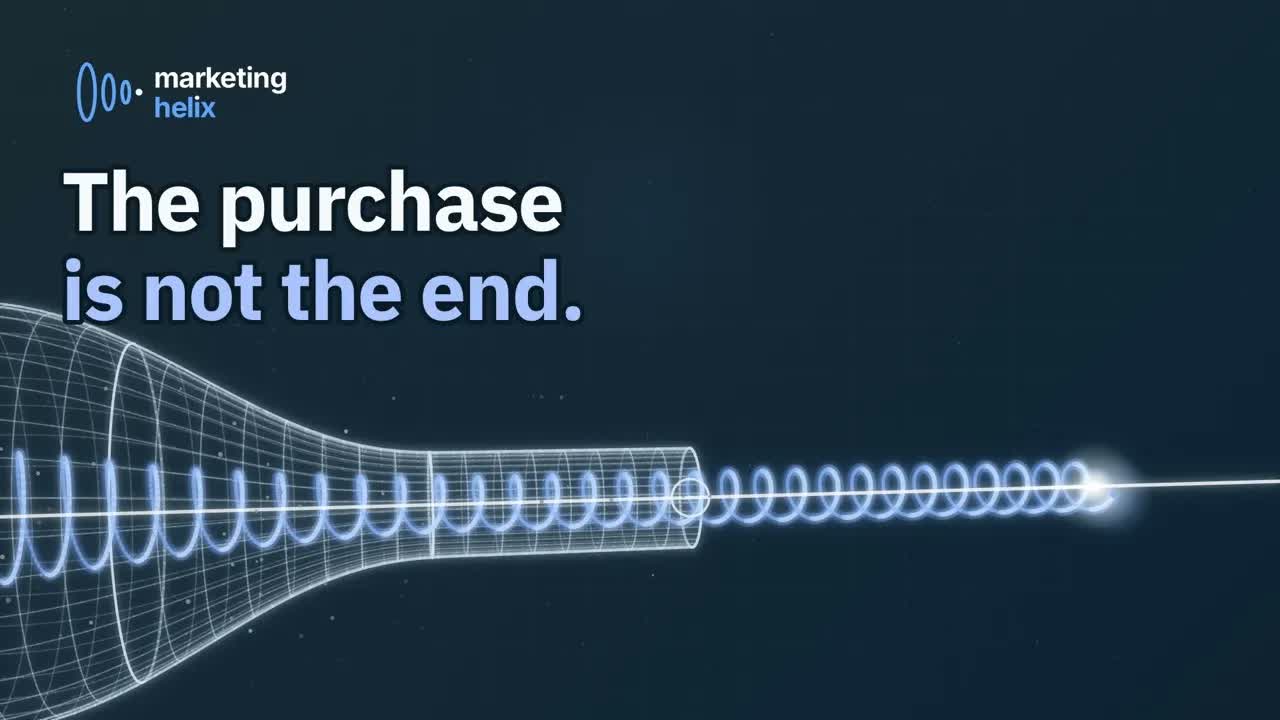
The last point of the film is the one most easily skipped. Being noticed only earns the chance. Once a message has the customer's attention, trust is the first test it faces. Without trust, relevance, and timing, a noticed message can drift away from the customer and then it is gone, and the film draws that drift. With them, the message can draw closer with every turn around the customer, and the film draws that too.
Those are two possibilities, not the only outcomes. Real customers notice a message, consider it, set it aside, and come back to it weeks later when something changes. The drawing shows the two ends so that the middle is easier to understand, and the narration says so in as many words.
Measured properly, this gives a company four different things to count along one customer's path: delivered, noticed, considered, and purchased. A count of placements, rankings, or mentions is a count of delivery. It is not a count of attention, and it is nowhere near a count of decisions. Keeping those apart is what lets a team see where a message is actually failing, instead of assuming that every shortfall is a reach problem and buying more reach.
Where this sits in the series
This is part two of five. Part one introduces the Marketing Helix as the model for customers in motion and turns the funnel on its side so that the customer's movement can be followed left to right. This film stays at one point on that path, the moment a message is noticed, and explains why nothing else in the model can begin before it.
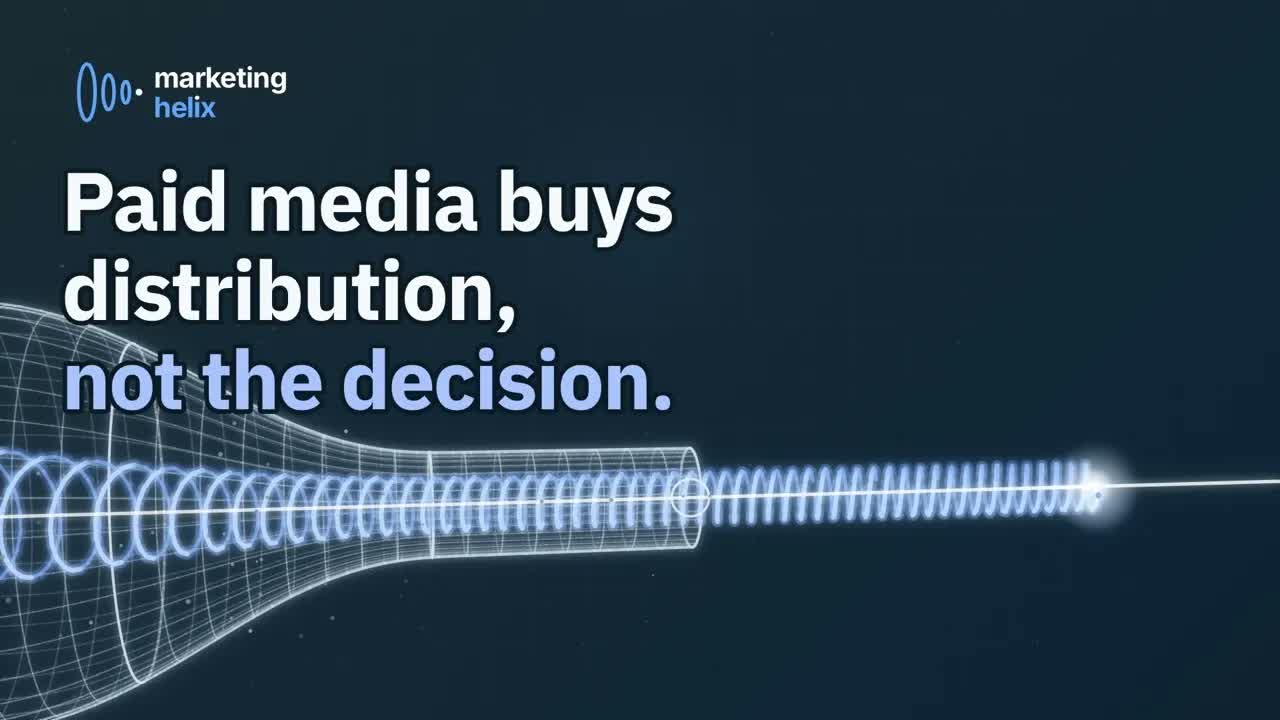
The parts that follow pick up where this one stops. After the purchase, the customer keeps moving and the message can stay close or drift wide, and a brand that goes quiet can find its next message passing unnoticed all over again. Paid media buys distribution, more messages delivered, and delivered is not yet noticed. The full model puts all of it on one path, from before the funnel to the next customers, with the noticed moment in the same place it holds here.
Where this does not hold
The model is descriptive. It explains why a message that was never noticed cannot earn trust, prove relevant, or arrive on time. It does not say what a company should make, where it should place it, or how much of it to produce, and it does not claim that the three conditions will produce attention for any particular message. Those are questions about a specific customer, a specific market, and the evidence a team has gathered about both.
The order the film teaches is an order of explanation, not a strict sequence in time. In practice attention and the three conditions affect one another. A company the customer has come to trust can find its next message noticed more easily, and a message noticed for the wrong reasons can cost trust it never had the chance to earn. The claim the film makes is narrow: without attention, the other three have nothing to work on.
Questions
Why does marketing get ignored even when it is everywhere?
Because being there is not being noticed. In the Marketing Helix, marketing is around customers in motion, and being present gives a message its chance, but the customer decides whether to notice it. Most messages pass a moving customer without being taken in, and that is the ordinary case, not a failure of any single message. More messages does not mean more attention.
What is attention in the Marketing Helix?
Attention is the moment a customer in motion notices a marketing message: the point at which a message that was only present becomes a message the customer has taken in. It is something the customer does, not something the company sends. It comes after being there and before trust, relevance, and timing, and it is not a fourth force.
What makes a marketing message more likely to be noticed?
Three conditions, none of them a guarantee: a message that matches what the customer is already doing, a message from a source the customer already trusts, and a message that is there when the customer is looking. Paid, earned, and organic routes each connect to one of these, and none of them is attention until the customer looks.
Does getting a customer's attention mean they will buy?
No. Noticed is not chosen. Being noticed only earns the chance, and trust is the first test a noticed message faces. Without trust, relevance, and timing a noticed message can drift away, and with them it can draw closer with every turn. The Marketing Helix treats delivered, noticed, considered, and purchased as four different things to measure separately.
Transcript
The Marketing Helix. All that marketing. And nobody looked.
Being there is not being noticed. This is part two of the Marketing Helix: attention. Six points, from the customer in motion to the first test.
The customer is already moving: searching, comparing, deciding, before any message arrives. Marketing is there, all around this customer: paid, earned, organic. Being there gives a message its chance.
So the company puts out more. Ads. Search.
Social. Email. Nothing.
Then more arrives. Video. Reviews.
Referrals. Press. Still nothing.
Then more again. Making a hundred videos does not mean anyone sees them. The customer never turns.
More messages does not mean more attention. Then something shakes them. It gets their attention.
It hooks them. It's all about attention. You have to get people to look.
What can earn that look? A message that matches what the customer is already doing. A source the customer already trusts.
A message that is there when the customer is looking. Organic, paid, earned: it does not matter. Attention does.
None of it is a guarantee. But noticed is not chosen. Being noticed only earns the chance.
Trust is the first test. Without trust, relevance, and timing, a noticed message can drift away, and then it is gone. With them, it can draw closer with every turn.
Two possibilities, not the only outcomes. So being there is not being noticed. This is the Marketing Helix.
Narration is a synthetic voice.