Chapters
Why the funnel stops at the sale
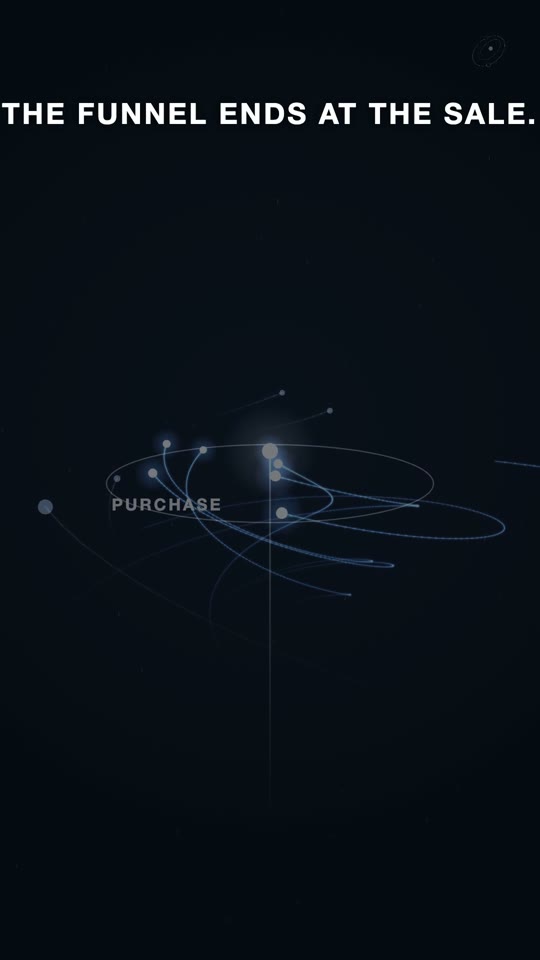
The funnel model treats conversion as terminal. A prospect enters at the top, advances through stages, and exits at the bottom as a closed deal. As a picture of a company's internal process that is accurate: the opportunity is won, the record changes status, and the sales team moves on. The error begins when the same diagram is read as a description of the person who bought.
Nothing about the customer stops at the moment of payment. The reason they bought is still active, the product or service now has to live up to what was promised, and the people around them will ask how it went. The funnel has no place to put any of that, so it drops out of view. The Marketing Helix keeps it in view because the behavior that follows the purchase shapes both whether this customer stays and what the next customer believes before they arrive.
The same three forces, working on a different question
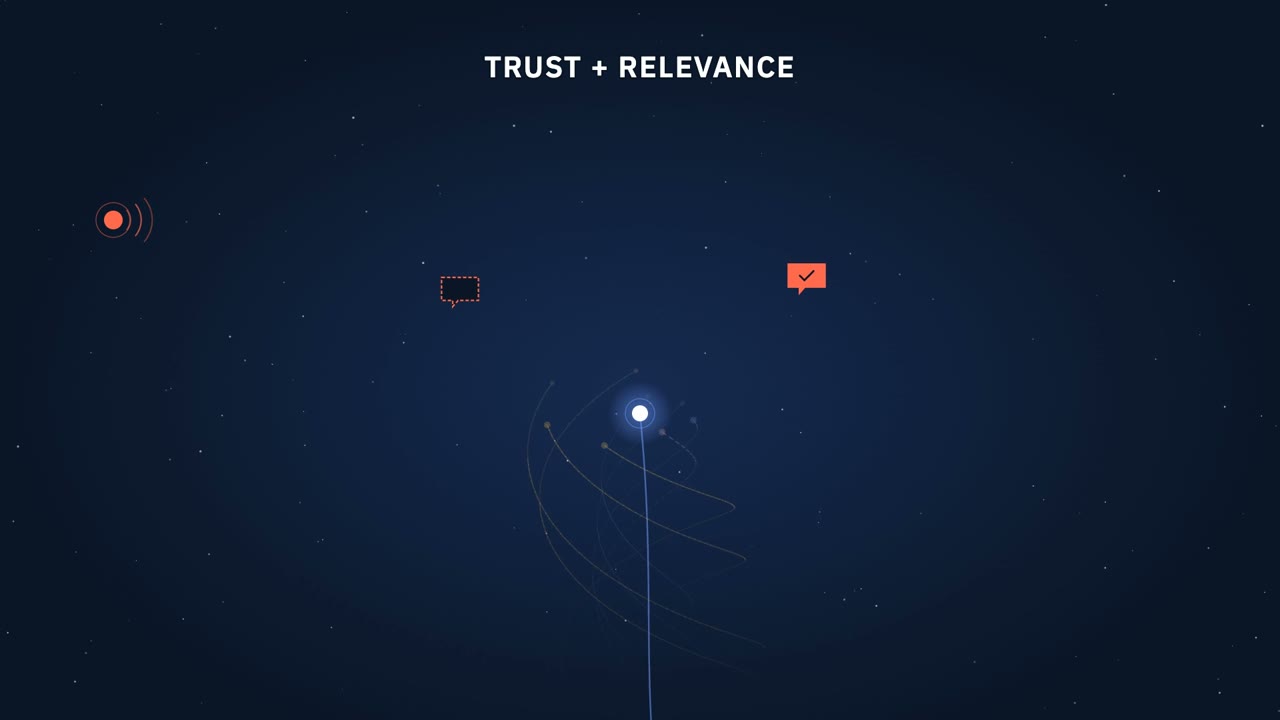
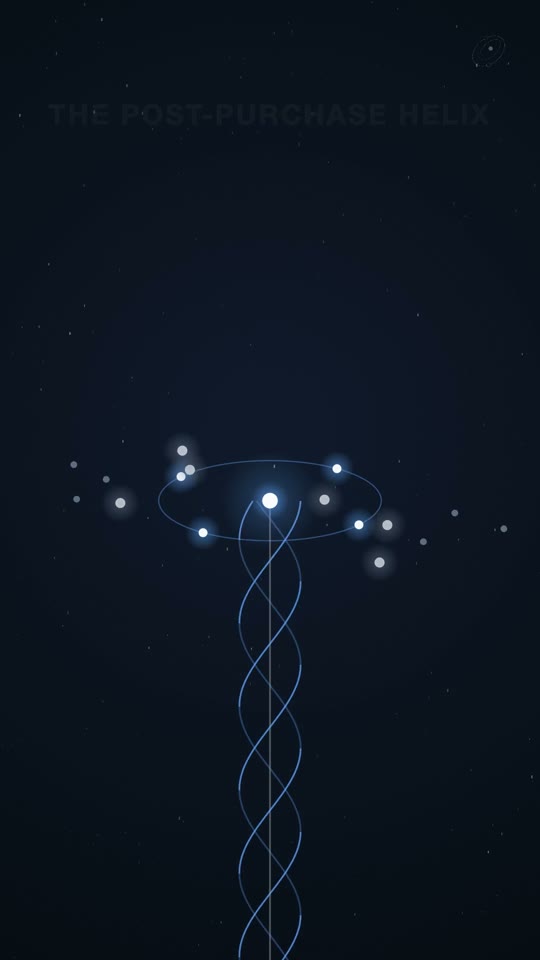
The Post-Purchase Helix is not a separate model. It is the same model with a different set of active participants. Before the sale, trust, relevance, and timing decide whether a message is pulled into consideration. After the sale, they decide whether the relationship tightens or loosens.
Trust changes character. Before purchase it was built from reviews, recommendations, and evidence of competence. After purchase it is built from direct experience: delivery, support, how problems are handled, whether the thing works as described. Direct experience is the strongest trust input there is, in both directions, which is why the period right after the sale carries so much weight.
Relevance moves because the customer's situation moves. What they needed to hear in order to buy is not what they need once they own the result. A message that was perfectly aligned during comparison can be noise a month later. Timing continues to run as well: renewals, replacement cycles, new needs, and the short window in which a satisfied customer is willing to say so in public all open and close on the customer's schedule, not the brand's.
Drift is the default, not disloyalty
Within the Marketing Helix, trust is a live condition rather than a permanent asset. Without reinforcement, the orbit around the customer widens and they drift. Nothing announces it. A customer who has heard nothing meaningful from a brand since the purchase has not simply stayed where they were; they have moved further away, and bringing them back costs more than keeping them close would have.
This is why the model says silence is not neutral. Silence from the brand is erosion, and silence from the customer does not reliably mean satisfaction. It is equally consistent with drift. The practical implication is about timing: the highest leverage moment for the post-sale relationship is immediately after the first purchase, while the orbit is still tight, not after signs of disengagement appear.
What a purchase can turn into
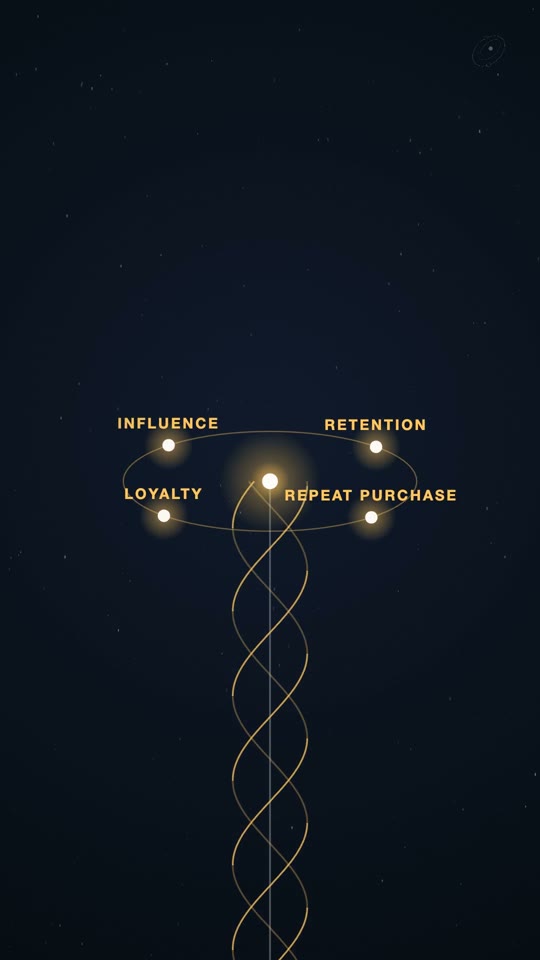
Where trust keeps growing, a single purchase can become several different things. It can become retention, where the customer stays with an ongoing product or service. It can become another purchase, where a new need is met by the same brand. It can become loyalty, where the brand is the default rather than one option among several. And it can become influence, where the customer's experience reaches other people through reviews, referrals, and ordinary conversation.
None of these outcomes is automatic, and the model does not treat them as a ladder. They are possibilities that stay open while trust is maintained and close quietly when it is not. Influence matters most for businesses that sell something a customer buys once, because for them it is often the only outcome available, and it is the one that reaches customers in motion who have not yet met the brand.
How the helix feeds the next customer
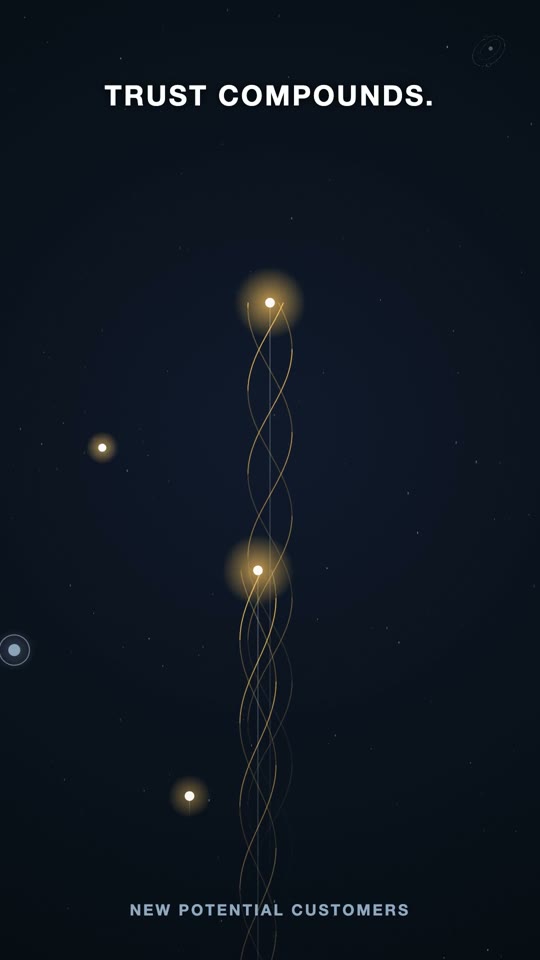
The central mechanism of the Post-Purchase Helix is feed-forward. When a customer writes a review, refers a peer, or recommends a brand in public, that behavior enters the information environment as a trust signal. A prospective customer researching on their own often meets that signal before any message the brand sent, so part of their trust threshold is already satisfied when the brand's own voice arrives.
Each aligned post-purchase experience raises the ambient trust baseline for everyone who comes after. The trust has been built by prior customers rather than by media spend, and new encounters start from a higher position. This is what the model means when it says the helix advances rather than loops: each turn begins from where the last one left the brand.
The same mechanism runs in reverse. A poor post-purchase experience raises the trust threshold for new customers, and frustrated customers tend to speak without being asked while satisfied ones often need a prompt. Trust is asymmetric: it accumulates slowly and degrades quickly. Post-purchase quality is therefore not separable from acquisition. It sets the conditions under which the next cycle begins.
What this asks of a business
Accepting the Post-Purchase Helix changes where attention goes. The post-sale relationship has to be observed and adapted in the same way as the pre-sale one: notice what is changing in expectations, use, and satisfaction, interpret what it means for trust, relevance, and timing, decide what should hold and what should change, adjust, then check whether the relationship actually improved. It is a repeating discipline, and it is not the same as sending more email.
It also changes how advocacy is treated. Advocacy is not something customers produce on their own at a steady rate. The willingness to share rises briefly after a good experience and then falls, and a brand that does not make room for it during that window rarely gets a second chance. Designing for that moment is part of the work, in the same way that being present when a prospect is ready is part of the work before the sale.
Where this does not hold
The Marketing Helix is descriptive, not prescriptive. It explains why the post-sale period matters and which forces are at work, but it does not say which retention program, review request, or follow-up sequence will work in a given category. Those are implementation questions that depend on the audience and the product.
Compounding is conditional. Not every satisfied customer becomes an advocate, not every advocate is heard, and a strong post-purchase experience cannot rescue a product that does not do what it claims. A repeat purchase rate can also rise for reasons unrelated to trust, such as switching costs or a lack of alternatives, so a retention number is evidence to interpret, not proof that trust is growing.
Shorts from this film
 0:15Is the sale the end of the customer journey?
 0:16What changes for a customer after they buy?
 0:14What can one purchase turn into?
 0:17How does customer trust compound?
Questions
What is the Post-Purchase Helix?
The Post-Purchase Helix is the part of the Marketing Helix that describes what happens after a customer buys. It holds that the purchase is a transition rather than an ending: the customer keeps moving, trust can grow or decay, and what existing customers say and do becomes a trust signal that new customers encounter before the brand reaches them.
Is the Post-Purchase Helix a separate model from the Marketing Helix?
No. The Post-Purchase Helix is the same Marketing Helix applied after the sale, with a different set of active participants. Trust, relevance, and timing still decide what happens. Before the sale they decide whether a message is pulled into consideration; after the sale they decide whether the relationship tightens into retention and advocacy or loosens into drift.
Why does the period right after a purchase matter so much?
In the Marketing Helix, the period right after a purchase is when the customer is closest to the brand and when direct experience starts to shape trust. Without reinforcement the relationship drifts, and drift is silent. Acting while the relationship is still close costs less than trying to recover a customer who has already moved away.
How do existing customers affect new customers in the Marketing Helix?
In the Marketing Helix, reviews, referrals, and public recommendations from existing customers enter the information environment as trust signals. New customers often meet those signals before any brand message, so part of their trust is already in place. Poor experiences work the same way in reverse, raising the trust threshold for everyone who comes next.
Transcript
Most marketing treats the sale as the finish line. But the funnel ends at the sale. The customer doesn't.
They keep moving. Needs change, expectations change, new choices appear. Everything that happens after the sale is the Post-Purchase Helix.
Trust, relevance, and timing don't stop at the purchase. They keep deciding what comes next. Where trust keeps growing, a purchase can become retention, another purchase, loyalty, or influence.
And trust compounds. Customers who trust you influence new potential customers. The customer never stopped moving.
This is the Marketing Helix. The model for customers in motion.
Narration is a synthetic voice.