Needs change
The need that led to the purchase is rarely the need a customer has a month later. Someone who bought software now needs to learn it. Someone who hired a contractor now needs the work to hold up. Someone who bought one product may now have a related problem it does not solve. The customer's situation has moved, which means the relevance of everything the brand says has moved with it.
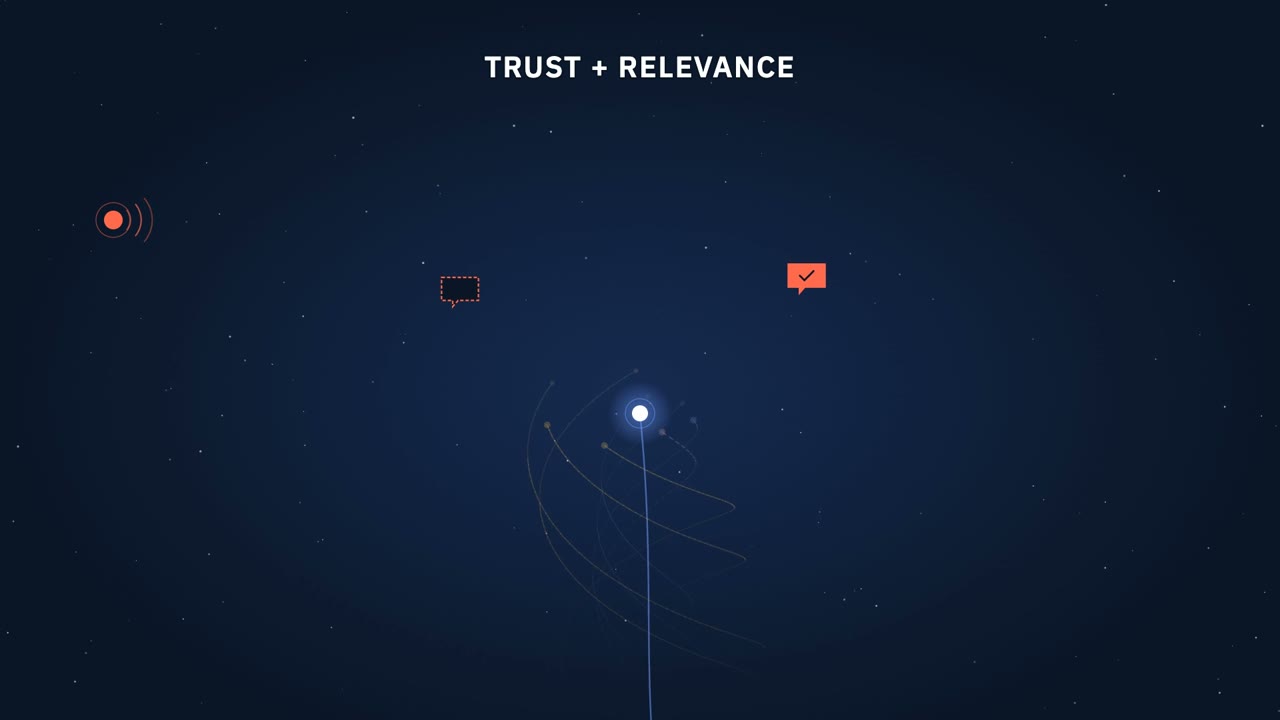
In the Marketing Helix, relevance is a match between a message and the customer's current state, not a property of the message itself. The persuasive material that helped close the sale answers questions the customer no longer has. A brand that keeps saying the same things after the purchase is aligned to where the customer was, not where they are.
Expectations change
Before the sale, a brand's claims were promises. After it, they become the benchmark the customer uses to judge the experience. Every delivery, reply, and fix is compared with what was said. Where experience matches the promise, trust builds on direct evidence, which is the strongest kind. Where it falls short, trust declines faster than it was earned, because the model treats trust as asymmetric: slow to accumulate and quick to lose.
Expectations also drift over time for reasons the brand does not control. What felt like excellent service when it was new becomes the baseline, and what other companies offer resets what the customer considers normal. A relationship that was aligned at the moment of purchase can fall out of alignment without anything visibly going wrong.
New choices appear
The market does not stop marketing to someone because they bought. Competitors keep reaching them, new options launch, and the customer keeps encountering reviews, recommendations, and comparisons. The Marketing Helix describes this as the environment around the customer changing, alongside the customer. A brand can lose ground with an existing customer without doing anything differently, simply because something around them moved.
This is why drift is the default rather than an exception. Without reinforcement the customer's attention widens to include alternatives, and the brand becomes one option among several again. Nothing announces this, and a quiet customer is as likely to be drifting as to be satisfied.
Why this is the same model, not a new one
The Post-Purchase Helix is not a retention program or a separate framework. It is the Marketing Helix applied after the sale, to the same person, who is still one of the customers in motion the model was built to describe. The forces are the same; the questions they answer are different. Trust now decides whether the relationship holds. Relevance decides whether what the brand says still fits. Timing decides whether help, a renewal, or a request for a review arrives while it can still matter. Observing those shifts and adapting to them is the same discipline the model asks for before the sale.
Where this does not hold
How much changes after a purchase depends heavily on the category. An ongoing service lives inside these shifts every month; a simple product bought once may see little change at all beyond what the customer tells others. The model describes the forces at work, not how fast they move in any particular business, and it does not prescribe the tactics for responding.
More from The Post-Purchase Helix
 0:45What happens to the customer after the sale?
 0:15Is the sale the end of the customer journey?
 0:14What can one purchase turn into?
 0:17How does customer trust compound?
Questions
What changes for a customer after they buy?
According to the Marketing Helix, three things keep changing after a customer buys: their needs, as the problem that led to the purchase evolves; their expectations, as the brand's promises become the benchmark for experience; and their choices, as competitors and new options keep reaching them. The model calls this period the Post-Purchase Helix.
Why does a message that closed the sale stop working afterward?
In the Marketing Helix, relevance is the fit between a message and the customer's current state. The message that closed the sale answered questions the customer had while comparing options. After buying, their questions are about using, maintaining, or extending what they bought, so the same message no longer matches where they are.
Does a quiet customer mean a satisfied customer?
Not reliably. The Marketing Helix holds that silence from a customer is as consistent with drift as with satisfaction. Needs, expectations, and alternatives keep moving after the purchase, and none of them announce the change. That is why the model asks brands to observe the post-sale relationship rather than assume it holds.
Transcript
They keep moving. Needs change, expectations change, new choices appear. Everything that happens after the sale is the Post-Purchase Helix. This is the Marketing Helix. The model for customers in motion.
Narration is a synthetic voice.