Chapters
What the funnel describes, and what it does not
The funnel is not a wrong diagram. It is an accurate description of something other than the customer. It describes a company's process: how leads are handled, which stage a deal sits in, what the organization does next. As a map of internal work it remains useful, and the Marketing Helix does not ask anyone to throw it away.
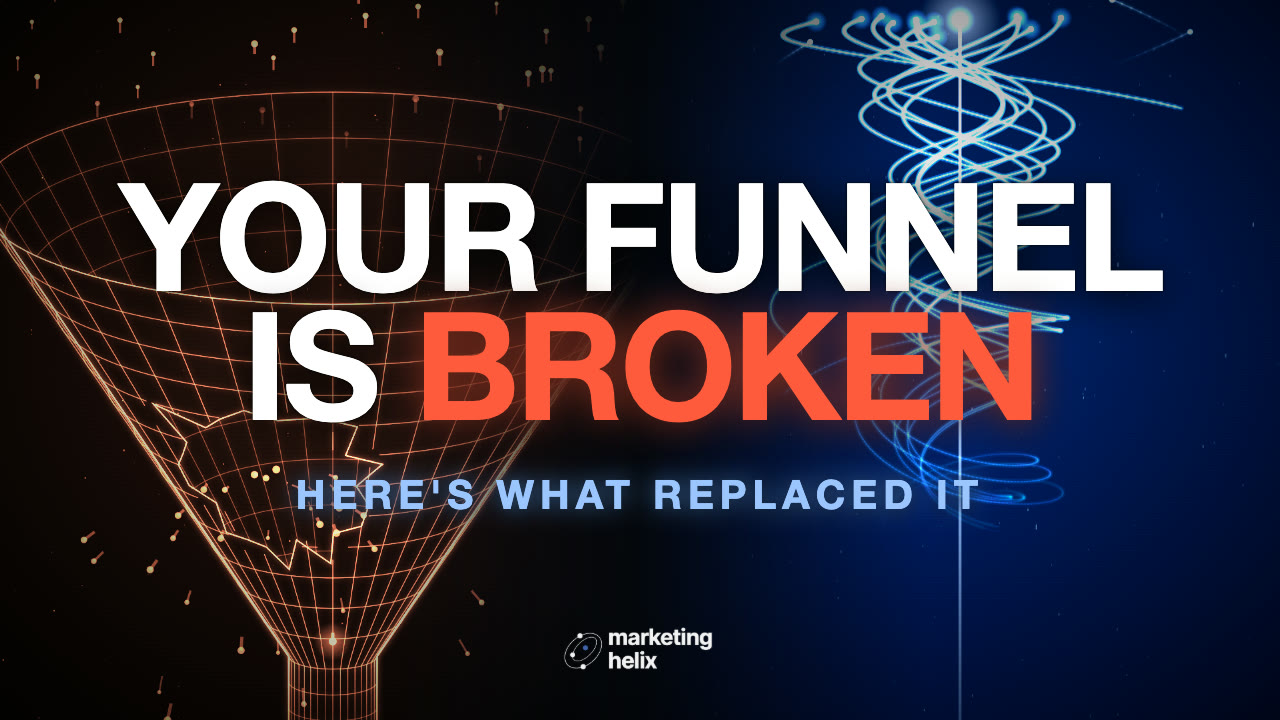
The trouble starts when the funnel is read as a model of the customer. At that point it makes three claims that do not hold for people: that customers enter at the top because the brand put them there, that they progress forward in sequence, and that the purchase is the end of the story. Customers arrive from a recommendation, a review, a search, or an AI answer before any brand message reaches them. They stall, reconsider, drift, and return. And they keep moving after they buy.
The funnel also treats trust as something that accumulates quietly in the background. The Marketing Helix treats trust as a gate. A message that does not pass it is never evaluated at all, which is why a funnel can look healthy on a report while the customers it counts as lost are simply somewhere the diagram cannot see.
Following the customer instead of dropping them in
The founding observation of the Marketing Helix is that customers are already in motion. Their readiness, their trust, and how seriously they are weighing a brand against its alternatives all change continuously, and most of that change is caused by things the brand did not do: a colleague's advice, a competitor's offer, a budget decision, a bad experience with someone else.
If the customer is moving, a brand cannot place them anywhere. It can only follow. In practice, following means being credibly present across the range of conditions a customer is likely to pass through, rather than tuning one campaign to one predicted moment. Because readiness is internal and largely invisible from outside, the goal is not to hit every customer at exactly the right second. It is to be there, trusted and relevant, whenever the right second arrives.
This is what the film means by target, surround, and follow. Targeting chooses who the brand is for. Surrounding means covering the range of questions and situations those people move through. Following means continuing to show up as their situation changes, instead of treating a pause as a loss.
The gate every message has to pass
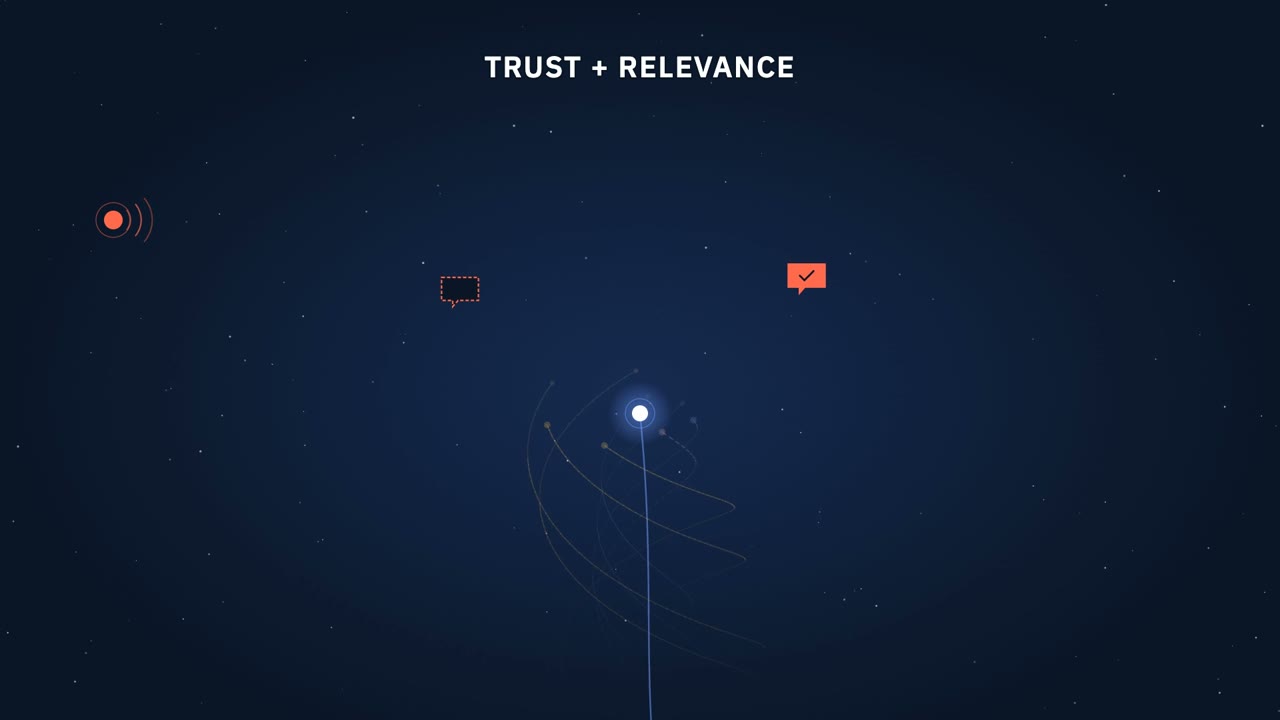
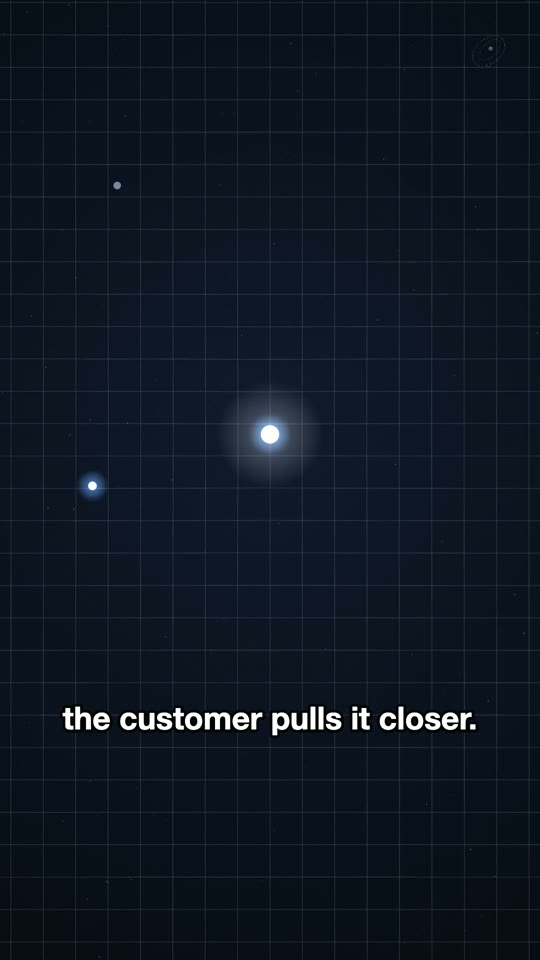
In the Marketing Helix, three forces decide whether a message is pulled into active consideration or passed over: trust, relevance, and timing. Trust is the permission condition: whether the customer allows the source into consideration at all. Relevance is the state-match condition: whether the message fits the question the customer is actually asking now. Timing is the convergence condition: whether trust and relevance meet while the customer is ready to act.
The forces are not additive. A message that is highly trusted and highly relevant but arrives outside the customer's readiness window does not produce half a result. It produces none. All three have to clear their thresholds at the same moment, which is why the model calls the result alignment rather than a score.
When alignment happens, the customer draws the message closer. The model names that pull signal gravity. The term is explanatory, not a claim about physics. It describes the shift in who does the moving: the customer pulls the aligned message in, rather than the brand pushing every message out and hoping volume will carry it. The full treatment of each force lives on the Three Forces pages.
Why most messages drift past
Most messages a brand sends do not align, and the model treats that as the normal condition rather than a failure to be fixed with more sending. Increasing volume toward a customer who is not ready does not make them ready. It tends to erode trust through overexposure, which lowers the chance that the next message passes the first gate.
The value of the model is diagnostic. When results fall away, the useful question is which force moved. High engagement with weak conversion usually points to timing: people trust the source and find the material relevant, but they are not yet deciding. Strong results in one narrow segment that will not spread usually point to trust: the wider audience has not yet granted permission. Wide recognition that rarely converts points the same way. Each diagnosis calls for a different response, and none of them is simply more of everything.
Why the shape is a helix
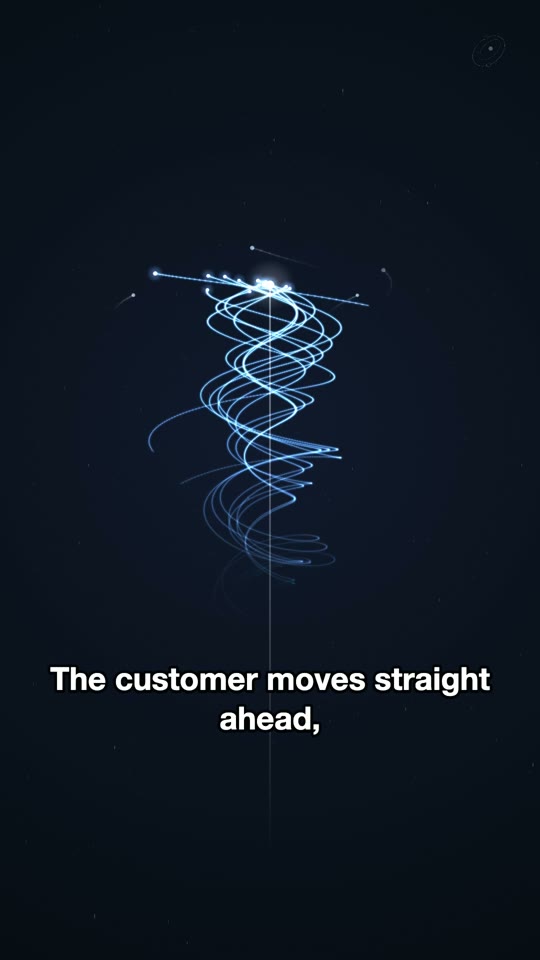
Trace a brand's messages over time around a customer who keeps moving forward, and the path they form is a spiral wrapped around a straight line. The customer advances; the messages circle. That is the helix, and the geometry is deliberate.
A funnel narrows toward a single exit. A loop returns to the same point on every turn. A helix advances: each turn sits at a different position along the axis than the one before. That is the model's way of saying an aligned interaction does not simply repeat. When credible experiences reinforce one another, the customer's trust baseline rises and the next encounter starts from a higher position. The advance is conditional. Contradiction, silence, or a poor experience can stall it or reverse it.
The helix also does not stop at the purchase. After a customer buys, the Post-Purchase Helix begins the next cycle: trust decays without reinforcement, and a satisfied customer's reviews and referrals enter the information environment as trust for other customers still in motion.
What changes for a business that uses the model
Adopting the Marketing Helix changes the questions a team asks more than the tools it uses. Before deciding what the company should do, describe what the customer is doing. Plan for a range of customer conditions rather than one assumed moment. Treat credibility work as the first gate, not a late-stage polish. And read a decline as a signal that a condition moved, not automatically as proof that the work got worse.
The model states this in one line: the customer does not move through marketing stages; marketing must adapt as the customer moves. Alignment is temporary, because the customer, the competitors, and the surrounding information keep changing. A message can stop working without ever becoming wrong. The response is to keep observing and adjusting, which is the practice the framework calls Adaptive Marketing.
Where this does not hold
The Marketing Helix is a descriptive model. It explains how customer attention behaves; it does not prescribe a campaign, a channel mix, or a budget. It will not tell a team what to publish next week without the team doing the work of observing its own customers.
In tightly controlled settings, such as a single regulated sales channel or a contained email sequence to a defined list, sequential stage models still produce useful diagnostics, and the funnel remains a sound description of the final conversion step once a customer is already aligned.
The fair objection is that "customers are in motion" can explain any result after the fact. The discipline that answers it is to state the expected motion in advance and then check it. If revenue falls while every leading indicator held steady, the honest conclusion is that the offer or the execution was the problem, not customer motion.
Shorts from this film
 0:19Why does the marketing funnel leak?
 0:15What decides which marketing messages get through?
 0:16Why is marketing shaped like a helix, not a funnel?
Questions
What replaced the marketing funnel?
The Marketing Helix describes customers as already in motion rather than dropped into a funnel by the brand. Instead of stages, it models the conditions under which a message is pulled into consideration: trust, relevance, and timing present at the same moment. The funnel remains useful for describing a company's internal process, but the Marketing Helix describes the customer.
What is signal gravity in the Marketing Helix?
Signal gravity is the Marketing Helix term for the pull a customer exerts on a message that carries trust, relevance, and timing together. The customer draws an aligned message closer instead of the brand pushing it through. The term is an explanatory model of customer behavior, not a claim about physics, and it only occurs when all three forces clear their thresholds.
Why is it called a helix and not a loop?
The Marketing Helix takes its name from helical geometry because a helix advances with each turn while a loop returns to the same point. The model uses that shape to show that aligned interactions can compound, raising the customer's trust baseline for the next encounter, while contradiction, silence, or a poor experience can stall or reverse the advance.
Does the Marketing Helix mean the funnel is useless?
No. The Marketing Helix keeps the funnel for what it describes accurately: a company's own pipeline and the final conversion step for a customer who is already aligned. What the Marketing Helix rejects is using the funnel as a model of the customer, because customers enter from any direction, move out of order, and keep moving after they buy.
Transcript
For a century, marketing pictured the customer as a funnel. Pour people in at the top, and watch most fall away. The Helix begins from the opposite premise.
We do not drop the customer into a system. We follow the customer, who is already in motion. As the customer moves, we surround them with marketing messages.
The customer pulls in the ones it trusts, and lets the rest drift past. Three forces decide what gets through. Trust, relevance, and timing.
When a message has all three, the customer pulls it closer. That pull is the gravity. There is no neat, narrowing path.
The customer is always moving, so we target, surround, and follow. Message after message: some are pulled in, most drift past. Traced over time, those messages form a shape around the customer.
A helix. The customer moves straight ahead, while we spiral around them. This is the Marketing Helix. The model for customers in motion.
Narration is a synthetic voice.