Chapters
One model, with the purchase as the hinge
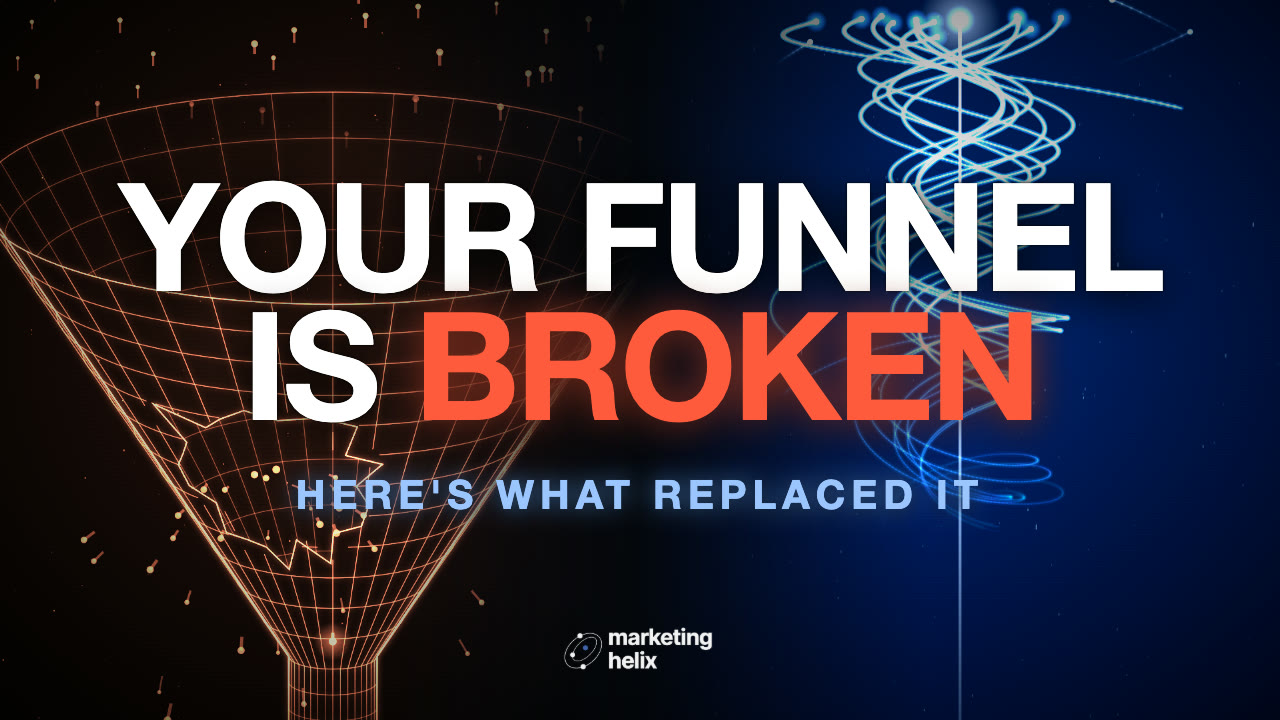
Most marketing frameworks cover half the picture. The funnel describes the path to a sale and stops there. Retention and loyalty programs pick up after the sale as though it were a separate subject. The Marketing Helix treats both halves as one system because the customer is one person throughout, and the forces acting on them do not change at checkout.
The purchase is where the model pivots. Before it, the question is whether a brand's messages are pulled into consideration. After it, the question is whether the relationship tightens or drifts. The same three forces answer both, and what happens in the second half sets the starting conditions for the first half of the next customer's journey.
Before the sale: following a customer who is already moving
The model begins from an observation the funnel does not make: customers are already in motion before any brand reaches them. Their readiness, their trust, and how seriously they are considering an option change continuously, moved by recommendations, prior experience, competitors, and events in their own lives. A brand does not place a customer at the top of a path. It meets a customer somewhere along a path of their own.
So the model reverses the direction of marketing. Instead of pouring people into a system and watching most fall away, a brand follows the customer and surrounds them with messages across the places they actually look. Most of those messages drift past. A few are pulled closer, and the customer is the one doing the pulling. The model calls that pull signal gravity: an aligned message is not pushed into consideration, it is admitted by the customer's own readiness.
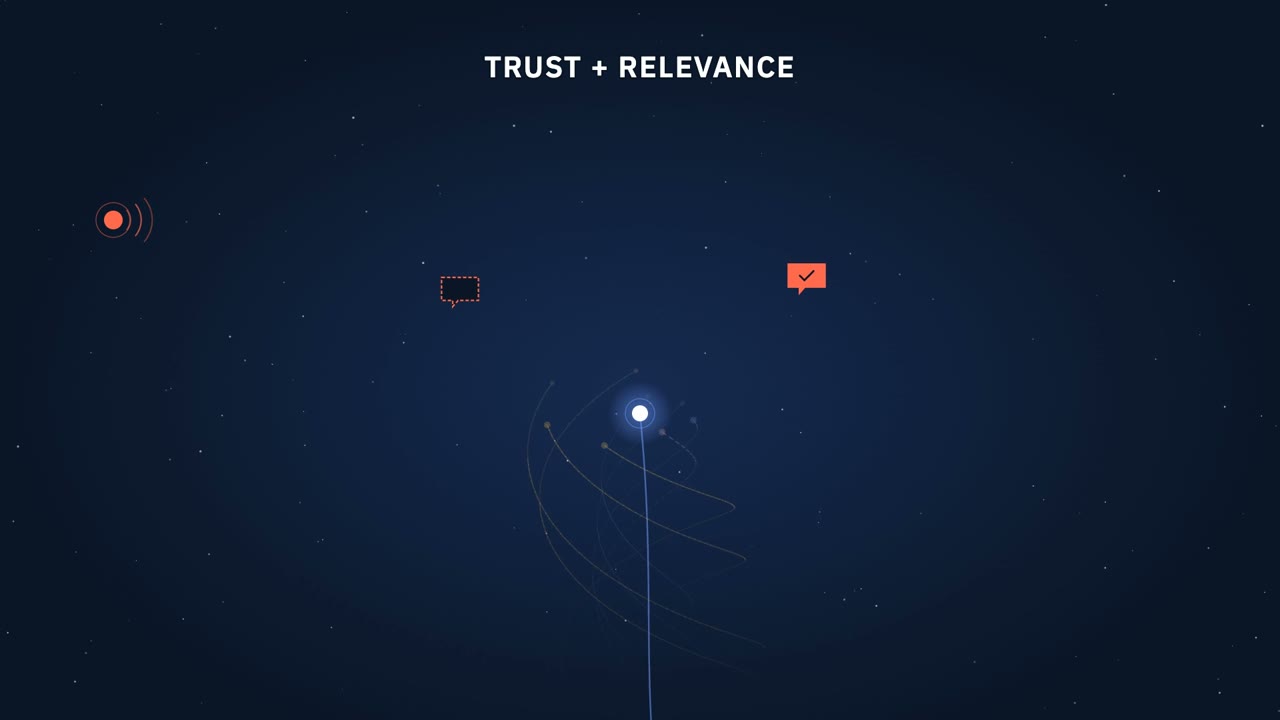
Three forces decide what gets pulled. Trust is the permission condition, the gate a message must pass before anything else about it matters. Relevance is the state match, whether the message fits where the customer is in their own consideration right now. Timing is the convergence condition, whether all of this lands while the customer is ready to act. The forces are simultaneous thresholds rather than a score: two out of three does not produce two thirds of a result.
Traced over time, the brand's messages form a spiral around a customer moving forward. That is the shape that gives the model its name, and it reflects a practical point. Because readiness is internal and largely invisible, the achievable goal is not to predict the exact moment but to be credibly present across the range of moments when readiness is likely to arrive.
At the purchase: a transition, not a terminal event
In the funnel, conversion is where the customer exits the model. In the Marketing Helix, it is where the helix advances to a new cycle. The customer is closer to the brand at this point than at any other, and that closeness is exactly why the period right after the purchase carries so much weight.
Trust changes character here. Before the sale it rested on evidence from others: reviews, recommendations, demonstrated expertise. After the sale it rests on direct experience, which is the strongest input the model recognizes and the fastest to turn in either direction.
After the sale: the Post-Purchase Helix
The customer keeps moving after they buy. Needs change as the problem evolves. Expectations change as the brand's promises become the benchmark for its delivery. New choices appear as competitors keep reaching people who bought elsewhere. Without reinforcement, trust decays and the customer drifts, and silence from the customer does not reliably mean satisfaction.
Where trust keeps growing, a purchase can become retention, another purchase, loyalty, or influence. For businesses whose customers buy once, influence is the outcome that matters most. And influence is where the two halves of the model join. A customer who trusts a brand passes that trust to others, and a recommendation arrives already trusted and already relevant, leaving only timing to align. New customers meet that trust before any message from the brand, and the next cycle begins from a higher baseline than the last.
This is why the model is a helix rather than a loop. A loop returns to the same point. A helix advances: each turn starts from where the previous one left the brand. The advance is conditional, and the same mechanism runs in reverse when post-purchase experience is poor, raising the trust threshold for everyone who comes next.
What the whole model asks of a business
Seen whole, the Marketing Helix produces a diagnostic question and a management consequence. The diagnostic question is which force moved. When results fall away, before or after the sale, the useful response is to ask whether trust, relevance, or timing changed, rather than to increase all activity at once.
The management consequence is that alignment is temporary. The customer moves, the conditions around the customer move, and a message or relationship that was aligned last quarter can fall out of alignment without anything visibly breaking. The model therefore cannot be applied as a one-time plan. It calls for a repeating discipline on both sides of the purchase: observe what is changing, interpret what it means for the three forces, decide what should hold and what should move, adapt, verify whether alignment improved, and learn from the result.
Where this does not hold
The Marketing Helix is a conceptual model, descriptive rather than prescriptive. It explains why customers move and which conditions decide what reaches them, but it does not name the tactics, channels, or formats that will work in a given category. Those remain choices to be made on the evidence in each context.
The gravity language is an explanatory metaphor, not a claim about physics, and the model does not claim to have measured the size of the pull. The funnel also remains useful for what it accurately describes: a company's own pipeline. The claim is not that the funnel should be discarded, only that it should not be read as a description of the customer.
Questions
What is the Marketing Helix?
The Marketing Helix is a customer behavior model in which customers remain in motion as trust and relevance pull the most aligned marketing closer. It covers the whole relationship: before the sale, trust, relevance, and timing decide which messages are pulled into consideration; after the sale, the same forces decide whether a purchase becomes retention, loyalty, or influence.
How is the Marketing Helix different from the marketing funnel?
The marketing funnel assumes customers enter at the top, progress through fixed stages, and exit at purchase. The Marketing Helix holds that customers are already moving, enter from any direction, and keep moving after the sale. It keeps the funnel as a picture of a company's pipeline but rejects it as a description of customer behavior.
Why is the purchase the hinge of the Marketing Helix?
In the Marketing Helix, the purchase is where the question changes from whether a message is pulled into consideration to whether the relationship tightens or drifts. The same forces govern both. What customers experience and pass on after buying becomes the trust environment for the next customers, so the second half feeds the first.
Why is it called a helix and not a loop?
The Marketing Helix takes its name from helical geometry. A loop returns to the same point on every turn. A helix advances, so each turn sits higher on the axis than the last. In the model, aligned interactions and advocacy can raise the trust baseline, so the next cycle starts from a stronger position, provided trust is maintained.
Transcript
For a century, marketing pictured the customer as a funnel. Pour people in at the top, and watch most fall away. The Helix begins from the opposite premise.
We do not drop the customer into a system. We follow the customer, who is already in motion. As the customer moves, we surround them with marketing messages.
The customer pulls in the ones it trusts, and lets the rest drift past. Three forces decide what gets through. Trust, relevance, and timing.
When a message has all three, the customer pulls it closer. That pull is the gravity. There is no neat, narrowing path.
The customer is always moving, so we target, surround, and follow. Message after message: some are pulled in, most drift past. Traced over time, those messages form a shape around the customer.
A helix. The customer moves straight ahead, while we spiral around them. Most marketing treats the sale as the finish line.
But the funnel ends at the sale. The customer doesn't. They keep moving.
Needs change, expectations change, new choices appear. Everything that happens after the sale is the Post-Purchase Helix. Trust, relevance, and timing don't stop at the purchase.
They keep deciding what comes next. Where trust keeps growing, a purchase can become retention, another purchase, loyalty, or influence. And trust compounds.
Customers who trust you influence new potential customers. The customer never stopped moving. This is the Marketing Helix. The model for customers in motion.
Narration is a synthetic voice.