Chapters
Distribution is the product being purchased
An advertising budget purchases something real and specific. It pays a platform to place a message in front of a chosen audience, in chosen places, at a chosen reach and frequency. That is distribution, and it is valuable. A brand that is never present when a customer is looking cannot be chosen, and paid placement is one of the few levers that puts a message in front of people on a schedule the brand sets.
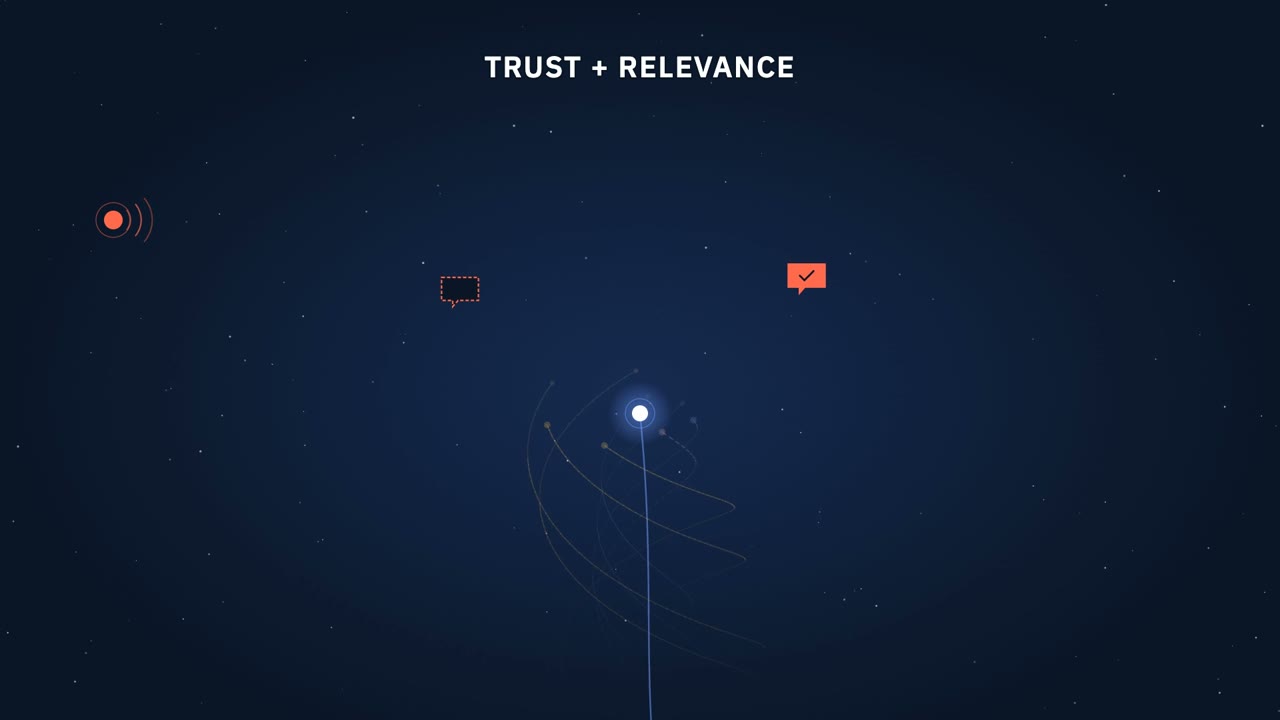
What the budget does not purchase is the customer's response. The Marketing Helix treats a message as a signal in orbit around a customer in motion. Paid media increases how many signals are in orbit and where they travel. It does not decide which of them the customer pulls into active consideration. That decision belongs to the customer, and it is made against the three forces the model describes: trust, relevance, and timing.
Keeping those two things apart is the whole point of the film. When a campaign is judged as if it bought customers, every shortfall looks like a media problem, and the usual answer is more media. When it is judged as distribution, the question becomes sharper: the message appeared, so which of the three forces kept it from moving anyone closer?
Why delivery is not attention, and attention is not trust
A delivered ad is an impression, not an encounter. The customer may scroll past it, register it without thinking about it, or never notice it at all. Even real attention is only a first step. In the model, trust is the permission condition: the first gate a message has to pass before relevance or timing can have any effect. A message from a source the customer does not yet trust is filtered below the level of deliberate attention. It is not rejected after careful thought. It is simply not let in.
Relevance is the second condition, and it is relational. A message fits or fails to fit the customer's current decision state, and that state keeps moving. An ad written for someone comparing providers reaches someone who has not yet decided they have a problem, and it lands as noise, however well it was made.
This is why the film separates delivery from attention and attention from trust. A platform can guarantee the first. It can influence the second. It cannot produce the third. Trust is accumulated over time from prior experience, third-party assessments, peer recommendations, and content that demonstrates competence. An impression can contribute to that baseline when it is credible and consistent. It cannot substitute for it.
More spend spreads the mismatch
When a campaign underperforms, spend is the easiest variable to move, so it is the one most often moved. The Marketing Helix explains why that frequently fails. The three forces are not additive. Partial presence does not produce partial alignment. If the message is wrong for the customer's decision state, or the offer does not answer the question the customer is actually asking, more budget carries that same mismatch to more people, more often.
The model goes further than calling this wasteful. Increasing message volume to customers who are not ready does not advance their readiness. It produces overexposure, and overexposure can erode trust without improving timing. A brand in an authority deficit, well recognized but not yet trusted, can deepen the deficit by raising the ratio of promotional messages to credible ones.
The practical discipline is diagnostic. Before adding spend, ask which force is absent. If the message is not trusted, the fix is evidence and credibility. If it is not relevant, the fix is the message, the offer, or the landing experience. If it is arriving outside the readiness window, the fix is presence and coverage across the places customers look, which is a question of consistency more than volume. Spend is the right answer only when fit is already in place and reach is the actual constraint.
When paid media accelerates discovery
None of this means advertising does not work. The film's claim is conditional, and the condition is fit. When targeting, message, offer, and landing experience match the customer and the moment, paid media does what it is good at: it puts an aligned message in front of more customers during more of their readiness windows. That can accelerate discovery and consideration in a way that earned channels alone move more slowly.
Timing is where this matters most. The model describes readiness as internal to the customer and largely invisible to the brand, which makes timing a distribution problem rather than a prediction problem. Paid distribution, used well, raises the probability that a trusted and relevant message is present when readiness occurs. That is a legitimate and often decisive contribution.
Even then, the ad is one signal among many. A customer who clicks moves into an environment the brand only partly controls: reviews, reputation, proof, what a colleague said, what happened the last time they bought something similar. Those signals decide what happens after the click. Adaptive advertising, which the site describes as Adaptive Marketing applied to paid media, is the practice of changing audience, creative, offer, allocation, and timing as that evidence changes.
What remains when the spend stops
Paid delivery is rented. When the budget ends, the placements end with it. What can remain is everything the campaign contributed to the customer's memory of the brand and to the wider trust environment: reviews earned by customers the campaign reached, proof those customers generated, and the familiarity that credible exposure left behind.
This is why the Marketing Helix treats the Post-Purchase Helix as part of the same system. Customers acquired through paid media produce trust signals after they buy, and those signals become inputs for customers who have not decided yet. A campaign that brings in well-served customers keeps paying into the trust baseline after the last ad runs. A campaign that brings in disappointed ones leaves behind signals that raise the threshold for everyone who comes next.
So the useful question about any paid program is not only what it produced while it ran. It is what it left behind in the environment where future customers will do their consideration.
Where this does not hold
The model is descriptive, not prescriptive. It explains why spend alone cannot create alignment. It does not say which platforms, formats, or budgets suit a given business, and it makes no claim about returns in any category. Those are implementation questions that depend on audience, competition, and evidence in a particular context.
There are also situations where distribution really is the binding constraint: a trusted brand with a well-matched offer that simply is not being seen. In those cases more paid reach can be the right move, and the distinction the film draws becomes a check rather than an objection. The claim is not that advertising fails. It is that advertising cannot manufacture the trust and relevance that decide whether it succeeds.
Shorts from this film
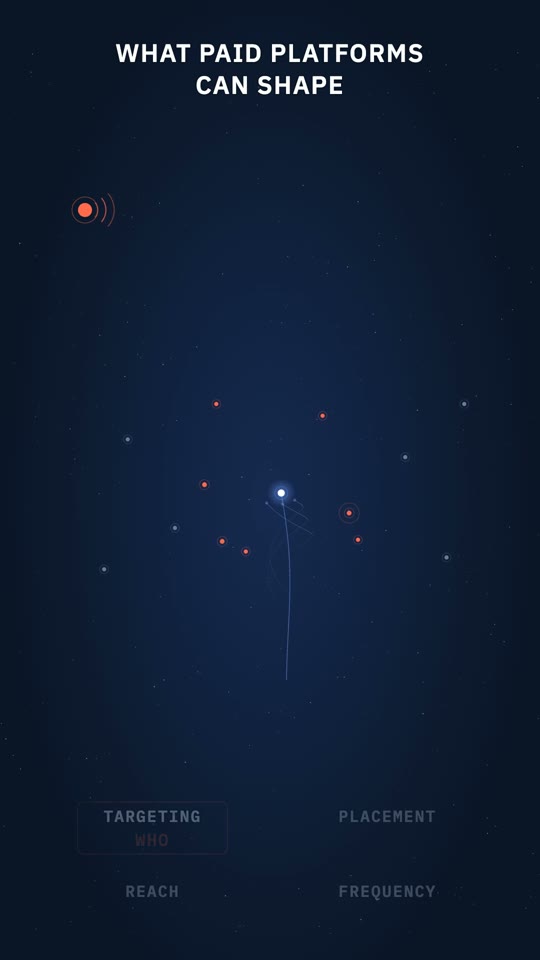 0:21Does advertising buy customers?
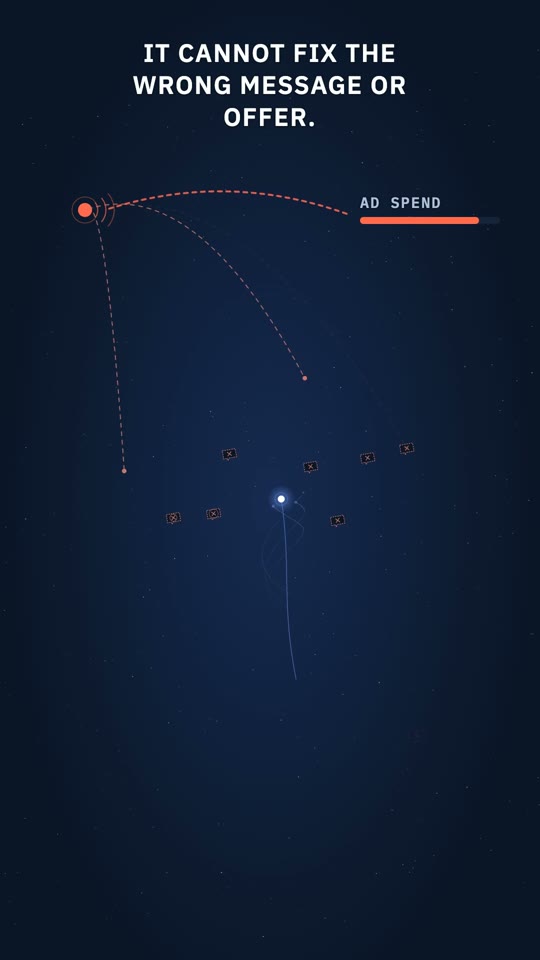 0:18Why doesn't more ad spend fix a weak ad?
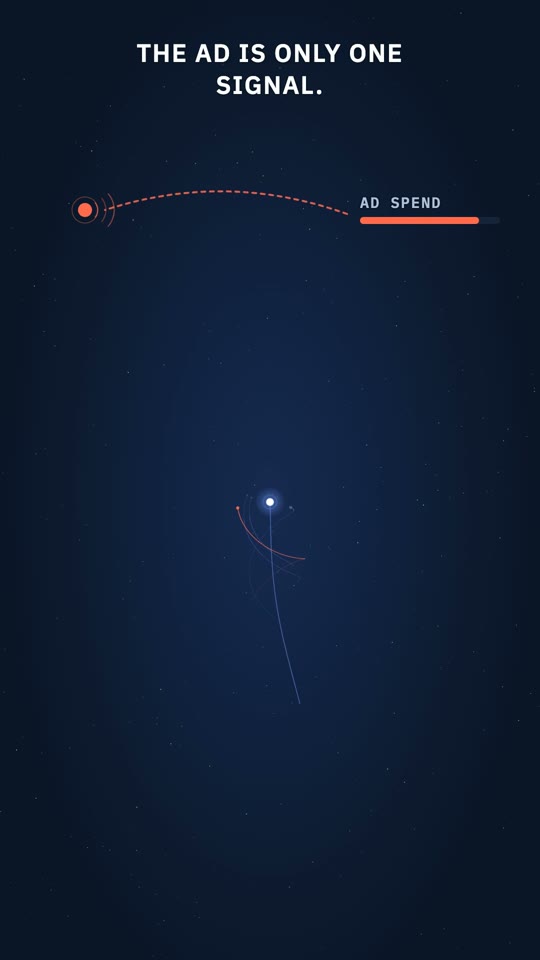 0:23When does paid media actually work?
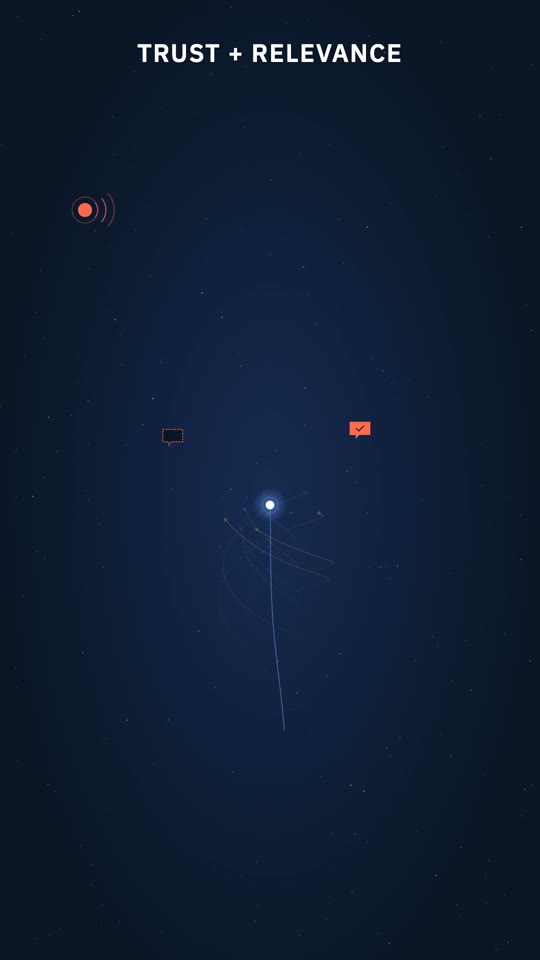 0:19What happens when you stop advertising?
Questions
What does paid media actually buy?
Paid media buys distribution. In the Marketing Helix, an advertising budget purchases opportunities for a message to appear: who sees it, where, how many people it reaches, and how often. It does not purchase the customer's decision. Whether a paid message moves a customer closer depends on trust, relevance, and timing, which paid placement can support but cannot produce on its own.
Why doesn't increasing ad spend fix a campaign that is not converting?
Increasing ad spend raises delivery, not fit. The Marketing Helix holds that trust, relevance, and timing are simultaneous thresholds, so a message that fails one of them fails at any budget. More spend carries the same mismatch to more people and can erode trust through overexposure. The fix is to diagnose which force is missing before adding reach.
When does paid advertising work best according to the Marketing Helix?
Paid advertising works best when targeting, message, offer, and landing experience fit the customer and the moment. In that condition, paid media raises the probability that an aligned message is present during a customer's readiness window, which can accelerate discovery and consideration. The ad remains one signal, and reviews, reputation, proof, and prior experience still shape the outcome.
What happens to a brand when it stops advertising?
When a brand stops advertising, paid delivery stops immediately. In the Marketing Helix view, what can remain is brand memory and the wider trust environment: reviews, proof, and referrals produced by customers the campaign reached. Those signals keep influencing future customers, positively or negatively, which is why post-purchase experience determines what a paid program leaves behind.
Transcript
Paid media doesn't buy customers. It buys distribution. Your customers are already moving.
Advertising creates more chances to reach them. Paid platforms shape who sees the ad, where it appears, how many people it can reach, and how often. But delivery is not attention.
Attention alone does not create trust or relevance. More spend can increase delivery. It cannot fix the wrong message or offer.
It only spreads the mismatch. When targeting, message, offer, and landing experience fit the customer and moment, paid media can accelerate discovery and consideration. But the ad is only one signal.
Reviews, reputation, proof, and prior experience shape what happens next. When spend stops, paid delivery stops. Brand memory and the wider trust environment can remain.
Paid media buys opportunities to appear. Trust and relevance determine whether the message moves closer or fades. The Marketing Helix.
The model for customers in motion.
Narration is a synthetic voice.