Three different things that get called results
Delivery, attention, and alignment are often reported as if they were one number. They are not. Delivery means the message was placed in front of someone. Attention means the person actually registered it. Alignment means the message passed the customer's trust threshold, matched their current decision state, and arrived during their readiness, all at once. Only alignment moves a customer closer.
Budget acts almost entirely on the first. It raises the count of placements. It has some influence on the second through placement and frequency. It has no direct access to the third. So when a campaign shows strong delivery and weak movement, the budget has done its job. Something else has not.
Why the forces do not add up
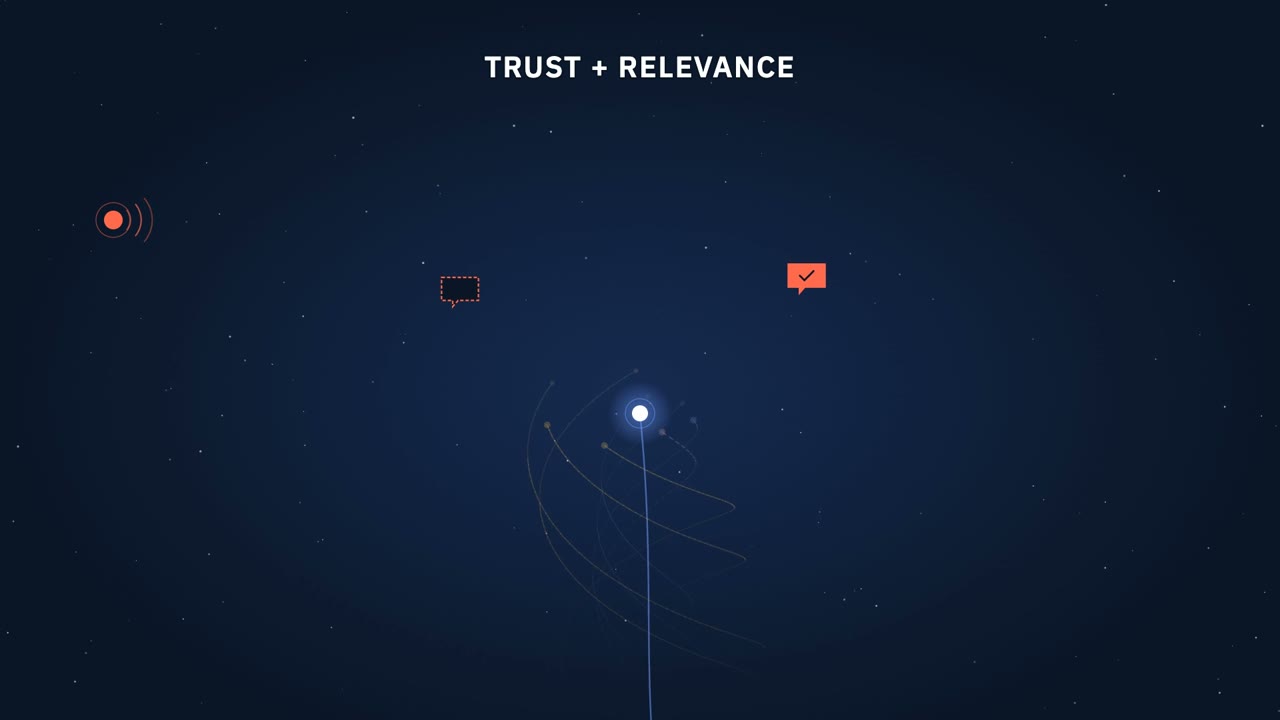
The Marketing Helix treats trust, relevance, and timing as simultaneous thresholds, not scores that can be traded against each other. A message that is timely and widely seen but not trusted is filtered before it is evaluated. A trusted message that answers the wrong question lands as noise. Partial presence does not produce partial alignment.
That is why spend cannot compensate. Extra delivery cannot fill in a missing force, because the missing force is not about how many people saw the message. It is about what happened when they did. Doubling the audience for a message that fails relevance produces twice as many encounters that fail relevance.
The cost that does not show on the invoice
The model identifies a second effect that makes this worse than waste. Sending more messages to customers who are not ready does not advance their readiness. It produces overexposure, and overexposure can erode trust without improving timing. The same applies to a brand that is well known but not yet trusted: raising the volume of promotional messages increases the share of encounters that feel like pressure rather than credibility.
So a weak ad at scale can leave the brand in a worse position for its next message, not merely an unchanged one. The trust baseline that future encounters start from can drift down while delivery metrics look healthy.
What to fix instead
The diagnostic question the Marketing Helix offers is which force is missing. If the source is not trusted, the work is evidence: reviews, proof, demonstrated competence. If the message does not match where customers are in their decision, the work is the message, the offer, or the landing experience. If it arrives outside readiness, the work is consistent presence in the places customers look when they become ready. Customers in motion keep changing position, so this diagnosis has to be repeated rather than settled once. Budget becomes the right lever when fit is already in place and reach is the real constraint.
Where this does not hold
Sometimes an ad is not weak at all and is simply under-distributed: trusted, relevant, and seen by too few people. In that case more spend is exactly the right answer. The model does not say spend never helps. It says spend cannot repair fit, and it gives no general rule about the right budget for any business.
More from What Paid Media Actually Buys
 0:59What does paid media actually buy?
 0:21Does advertising buy customers?
 0:23When does paid media actually work?
 0:19What happens when you stop advertising?
Questions
Why doesn't more ad spend fix a weak ad?
More ad spend increases delivery, meaning how many people the ad is placed in front of. The Marketing Helix holds that customers select only when trust, relevance, and timing align at once. If a weak ad fails one of those, a bigger budget spreads the same failure to more people, and overexposure can erode trust further.
What is the difference between delivery and attention in advertising?
Delivery is a platform placing an ad in front of someone. Attention is that person actually registering it. In the Marketing Helix, even attention is not enough: a message must also pass the trust threshold and match the customer's current decision state before it moves them closer. Budgets buy delivery and influence attention, but they cannot purchase trust.
Transcript
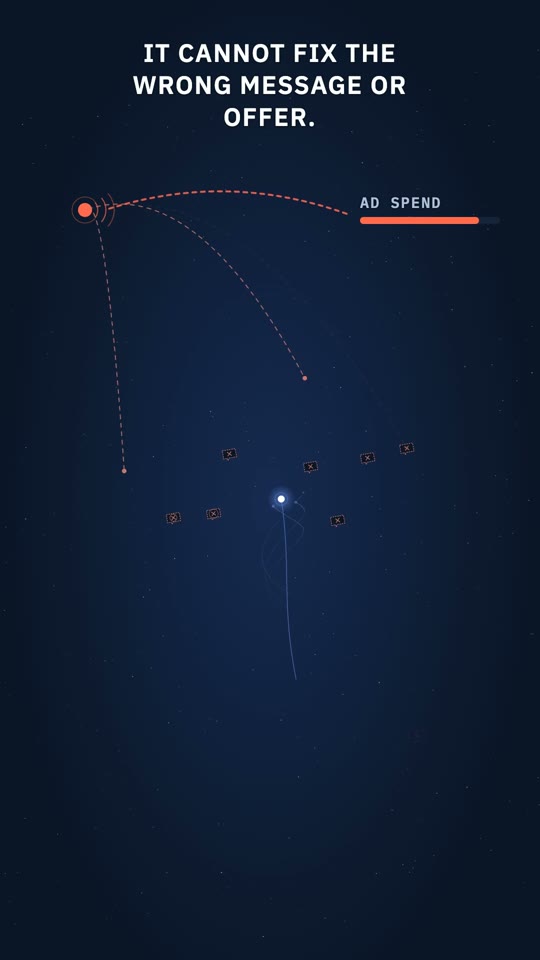
But delivery is not attention. Attention alone does not create trust or relevance. More spend can increase delivery. It cannot fix the wrong message or offer. It only spreads the mismatch. The Marketing Helix. The model for customers in motion.
Narration is a synthetic voice.