Two motions at once
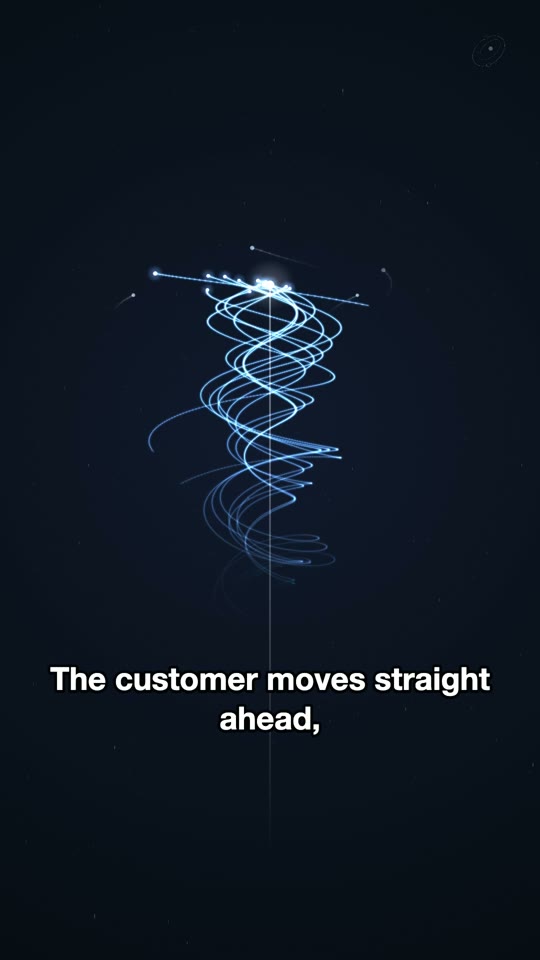
The helix combines two movements that a funnel collapses into one. The customer's movement runs along the axis: forward through time, through their own situation, at a pace the brand does not set. The brand's movement runs around the axis: message after message, positioned to be present wherever the customer goes next.
A funnel merges these by assuming the brand's stages are the customer's path. The helix keeps them separate, and that separation is the point. The customer is not being moved along a track the brand built. The brand is keeping pace with someone who is going somewhere on their own, and only the messages that align with them at a given moment are pulled in.
Why not a line, and why not a loop
A straight line, or its funnel form, says the customer passes each point once, in order, and exits at the purchase. That misses the drifting and returning that make up much of real customer behavior, and it has no place for what happens after the sale.
A loop fixes one of those problems and introduces another. It captures repetition, but a loop returns to the same point on every turn, which implies that each cycle starts over from the same place. The Marketing Helix treats that as false. A customer who comes back is not the same customer who left.
A helix advances. Each turn sits at a different position along the axis than the turn before it. The shape can show repetition and change together: the brand keeps returning to the same customer, and each return meets someone further along.
What each turn carries forward
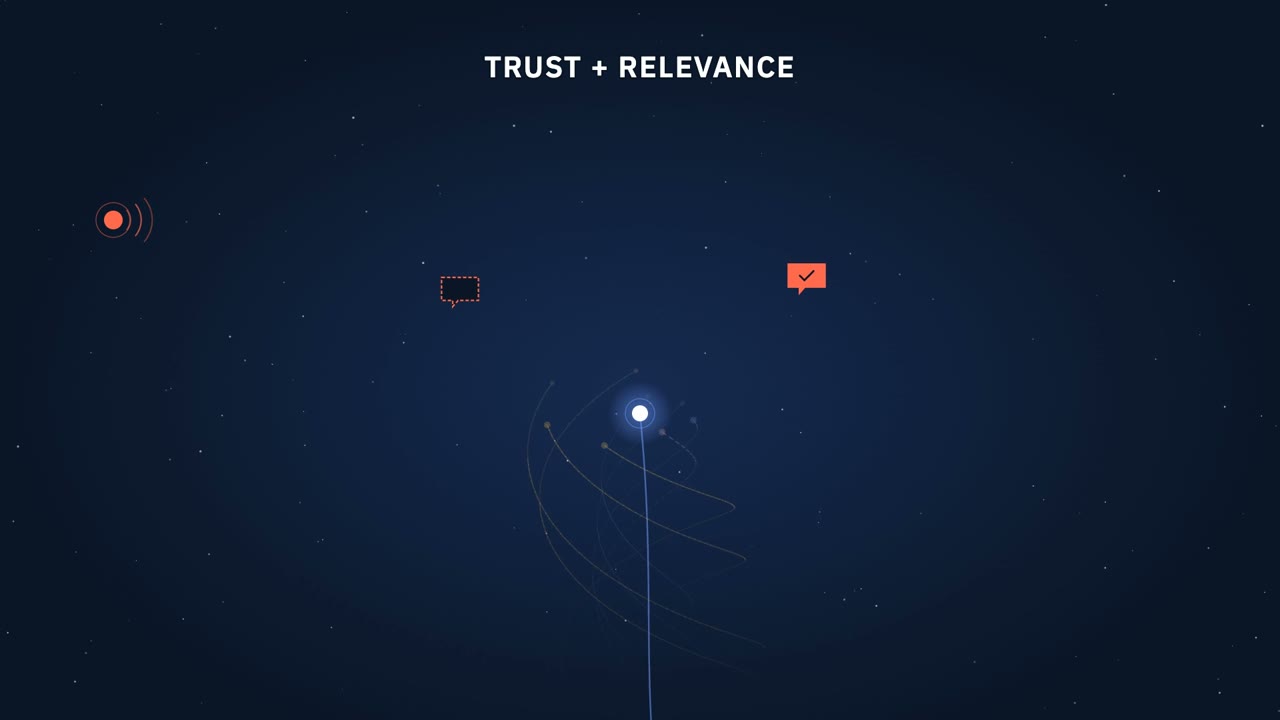
Because the helix advances, an aligned encounter does not simply repeat an earlier one. When credible experiences reinforce each other, the customer's trust baseline rises, and the next message starts from a higher position with a lower threshold to clear. That is how trust compounds in the model.
The advance is conditional, and the shape has to show the other direction as well. Contradiction, silence, or a poor experience can stall the climb or reverse it. Alignment is temporary: it holds only while trust, relevance, and timing stay strong, and all three keep changing.
The helix also continues past the purchase. After a customer buys, the Post-Purchase Helix begins the next cycle. Trust has to be maintained or it decays, and a satisfied customer's reviews and referrals become trust signals for other customers who have not yet reached alignment. A funnel ends at the exit. A helix keeps going.
Where this does not hold
The helix is a descriptive picture of behavior, not a measurement of it. It does not predict how many turns a given customer takes or when the next aligned encounter will happen, and it does not claim that every relationship climbs. Many turns produce nothing, and some relationships decline. The shape explains why continued, credible presence matters; it does not guarantee a result from it.
More from The Marketing Helix
 0:58What replaced the marketing funnel?
 0:19Why does the marketing funnel leak?
 0:15What decides which marketing messages get through?
Questions
Why is it called the Marketing Helix?
The Marketing Helix is named for the shape a brand's messages trace over time around a customer who keeps moving forward: a spiral around a straight line. The name also marks a structural claim. A helix advances with each turn, unlike a loop, so aligned encounters can build on earlier ones and raise the customer's trust baseline.
What is the difference between a marketing helix and a marketing loop?
A marketing loop returns to the same point on each cycle, implying every cycle starts over. The Marketing Helix advances: each turn sits further along the customer's path, so a returning customer is treated as someone who has changed. The Marketing Helix also shows that the advance can stall or reverse when trust is contradicted or neglected.
Does the Marketing Helix end at the purchase?
No. In the Marketing Helix the purchase is one point on a continuing path. The Post-Purchase Helix begins the next cycle, where trust must be maintained or it decays, and where reviews and referrals from satisfied customers become trust signals for other customers still in motion who have not yet chosen a brand.
Transcript
Traced over time, those messages form a shape around the customer. A helix. The customer moves straight ahead, while we spiral around them. This is the Marketing Helix. The model for customers in motion.
Narration is a synthetic voice.