The named ideas that came before the Marketing Helix, or beside it: what each tried to explain, why it mattered, and why it is not the current model.
This page is part of the Marketing Helix development history. It is preserved as an exploration or earlier version, not as the current canonical model.
The Gravity Funnel Superseded
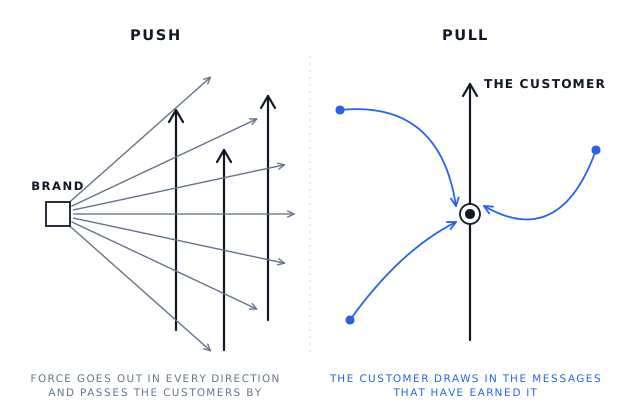
What it tried to explain. Why some marketing is drawn toward a decision instead of being forced toward it. The first lineage essay describes it as “the model that replaced the push-based marketing funnel with earned pull.”
Why it mattered. It was the first correction: from applied force to earned attraction.
Why it was not retained. In the essay’s own words, it “remained a funnel in shape and described capture, not the source of the pull.”
Where it went. The pull it named is now drawn as a marketing message moving closer to the customer. The funnel itself is kept, as the company’s process. Read the original: From the Funnel to the Gravity Funnel.
Superseded Push versus pull, the Gravity Funnel’s central contrast. Drawn October 1, 2026.
Fly By Gravity Superseded
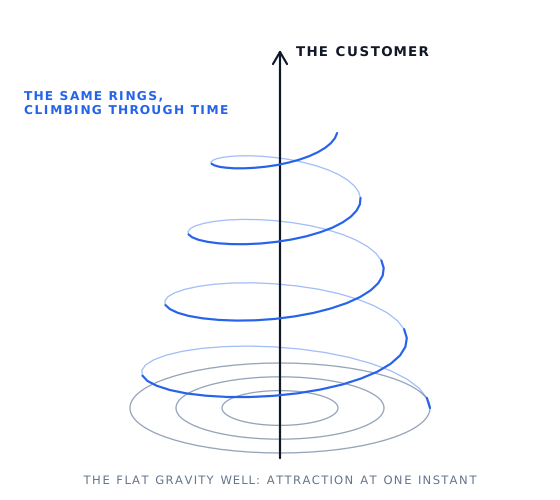
What it tried to explain. Where the pull comes from. The second lineage essay puts it this way: “Trust acts as mass; brands move customers by what they have earned, not what they spend.”
Why it mattered. It left the funnel shape and named attraction on its own terms.
Why it was not retained. The essay again: it “pictured attraction as a static field around a still customer.” A flat field shows attraction at one instant. It cannot show a customer advancing through time.
Superseded The well uncoils: how the flat field was turned into a helix. Drawn upright, October 1, 2026.
The Gravity Well Superseded
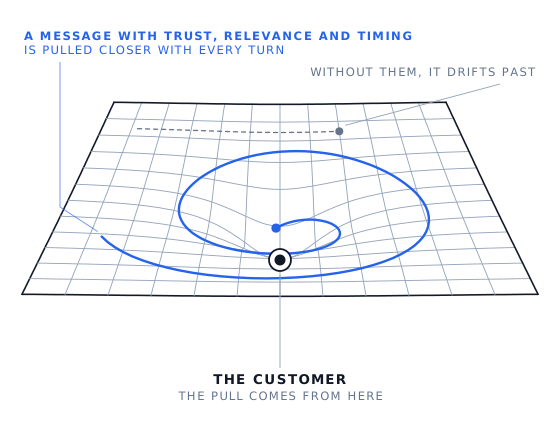
What it tried to explain. The same pull, drawn as a sheet bending toward the customer at its center: a message that carries trust, relevance, and timing comes closer with every turn, and one without them drifts past.
Why it mattered. It was the clearest single picture of “drawn closer, not pushed.” It stood on the homepage, the About page and The Model until October 10, 2026.
Why it was not retained. It shows one instant, from above. It has no direction of time, so it could not sit in a family of figures that all run left to right.
Archived The first gravity well, from the original diagram set.
The Intent Grid Exploration
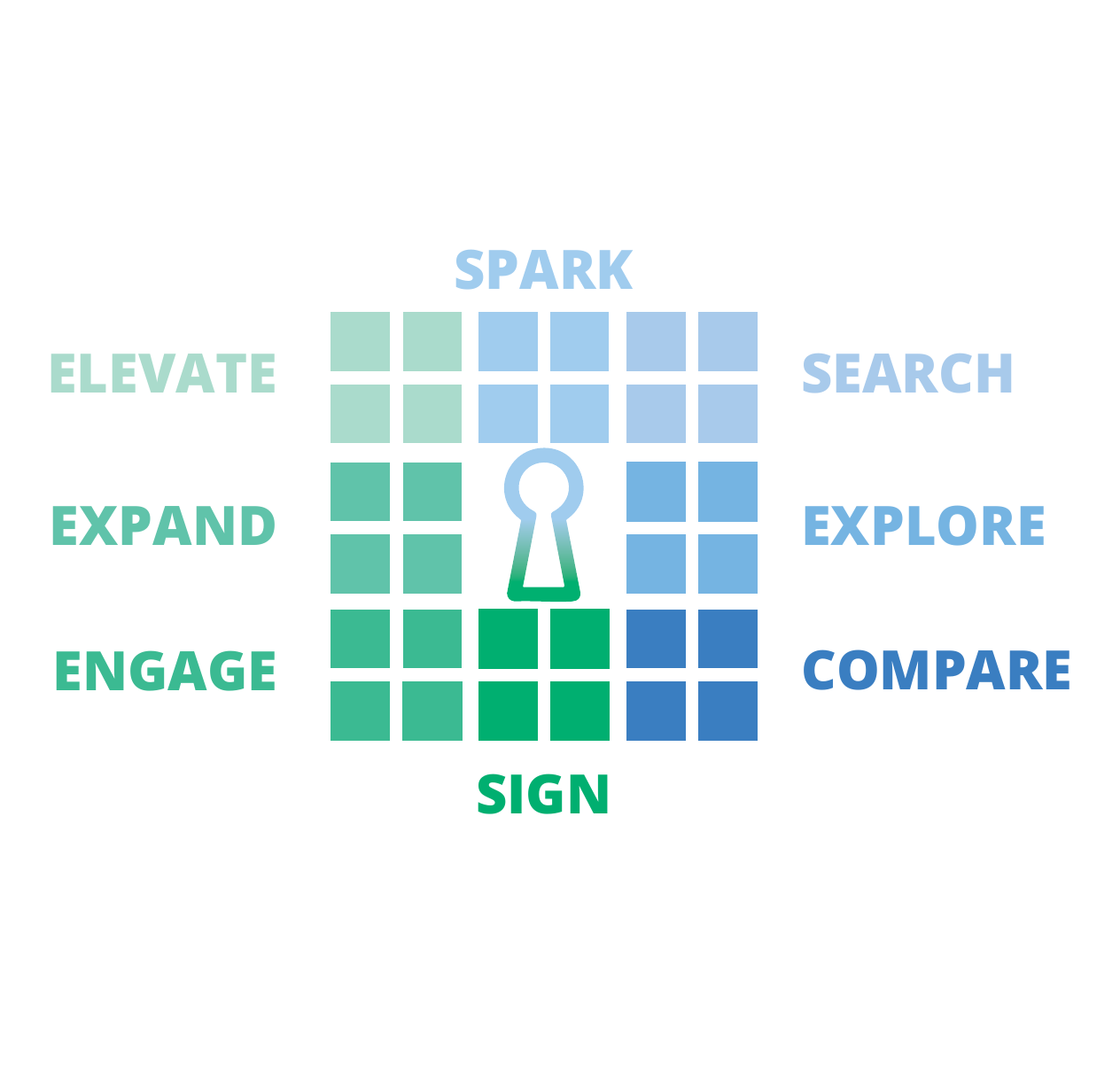
What survives. A design file titled The Intent Grid, with the line “Where the customer holds the key.” It is a three by three grid with a keyhole at its center and eight named positions: Spark, Search, Explore, Compare, Sign, Engage, Expand, Elevate.
What it tried to explain. As drawn: the positions a customer can occupy around a decision, four leading to signing and four after it, with the customer, not the company, holding the key.
Why it was not retained. No written account of the decision is in the record, and none is supplied here. What can be said is that the model as taught does not place the customer in named positions: positions belong to the company’s funnel, and the Helix describes what changes around the customer.
Where it went. “The customer is in control” is principle 03. The post-signing half (Engage, Expand, Elevate) is the ground the Post-Purchase Helix covers.
Exploration The Intent Grid, from the design file.
Exploration Its title and line.
Four named diagram studies Archived
The original diagram set had 26 drawings. Most became figures that are still taught, redrawn. Four were named ideas that did not become part of the model as taught. They are kept as drawn.
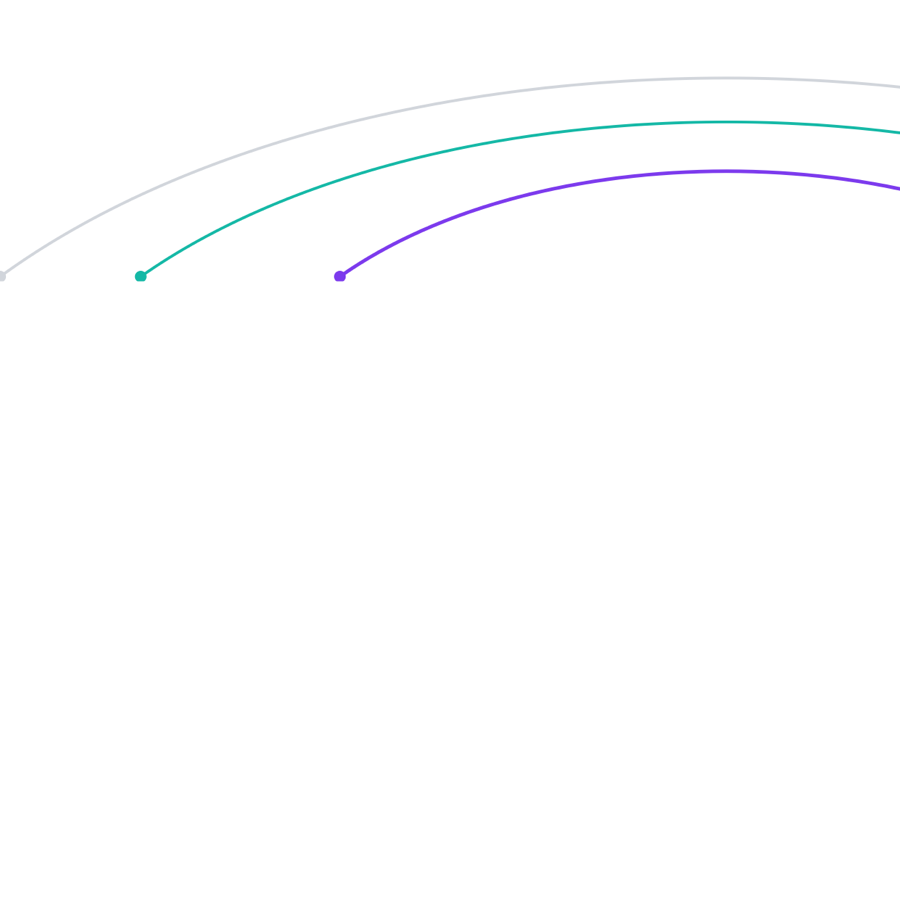
Orbit Arcs. Messages as partial arcs around a center.
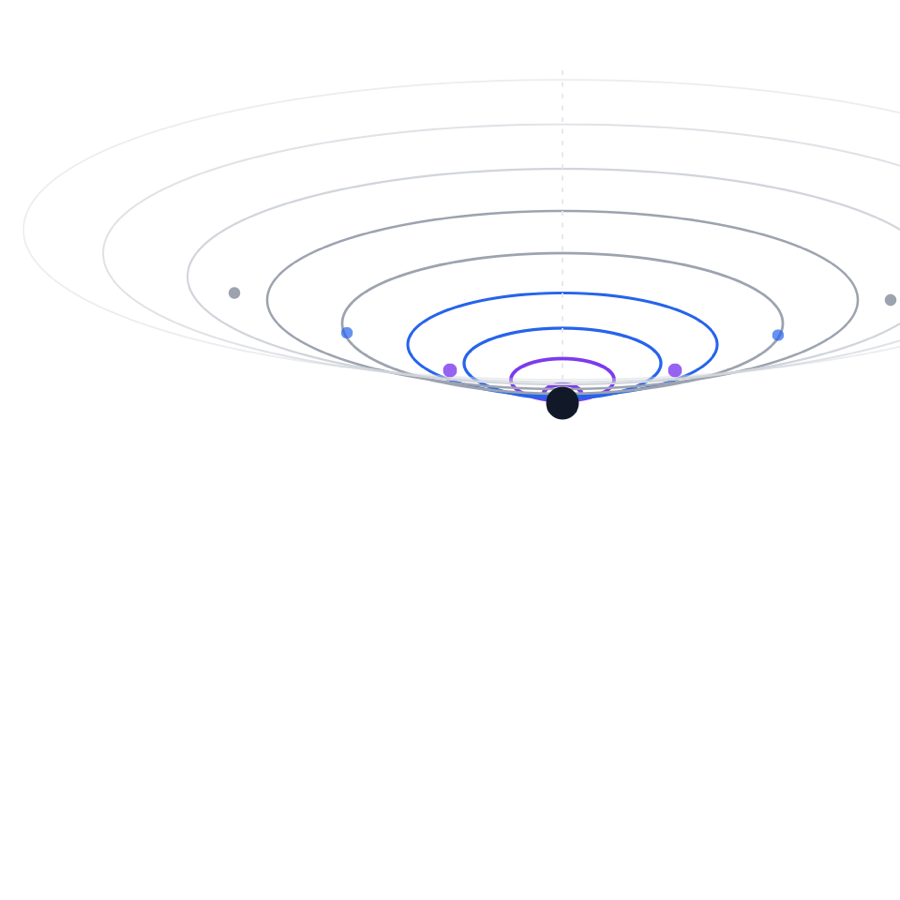
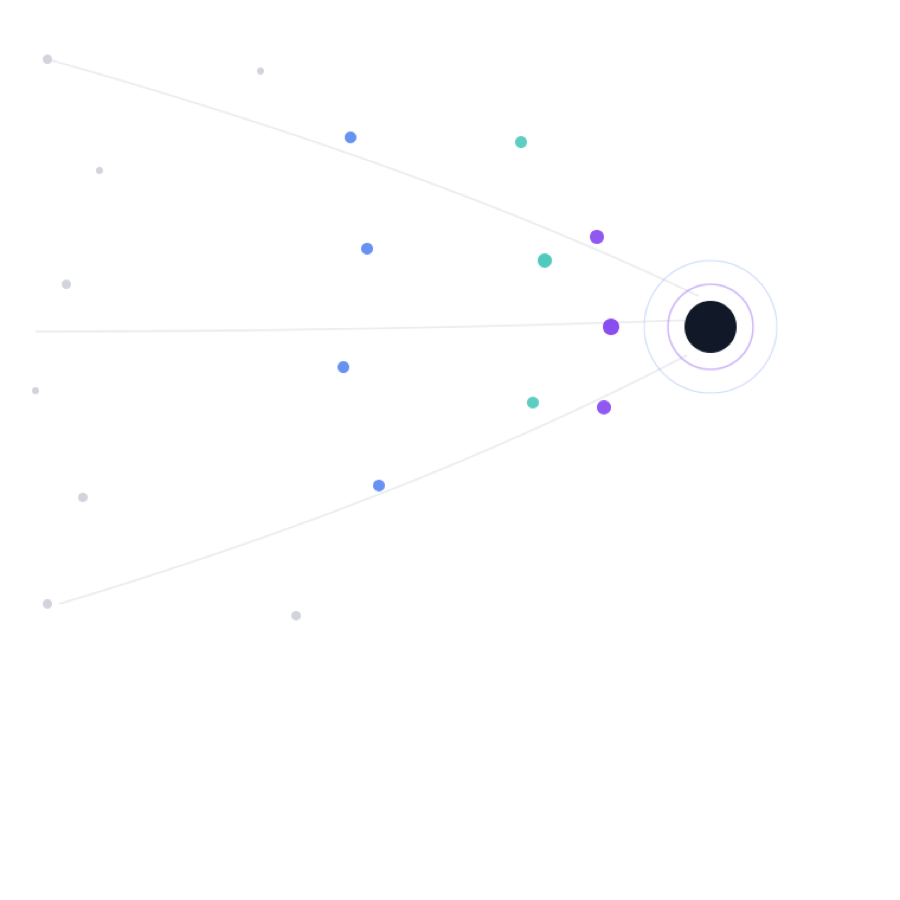
Signal Field. Many signals around a customer, most scattering wide and a few coming near.
Non-Linear Entry. Customers joining at any point, early, midway or late.
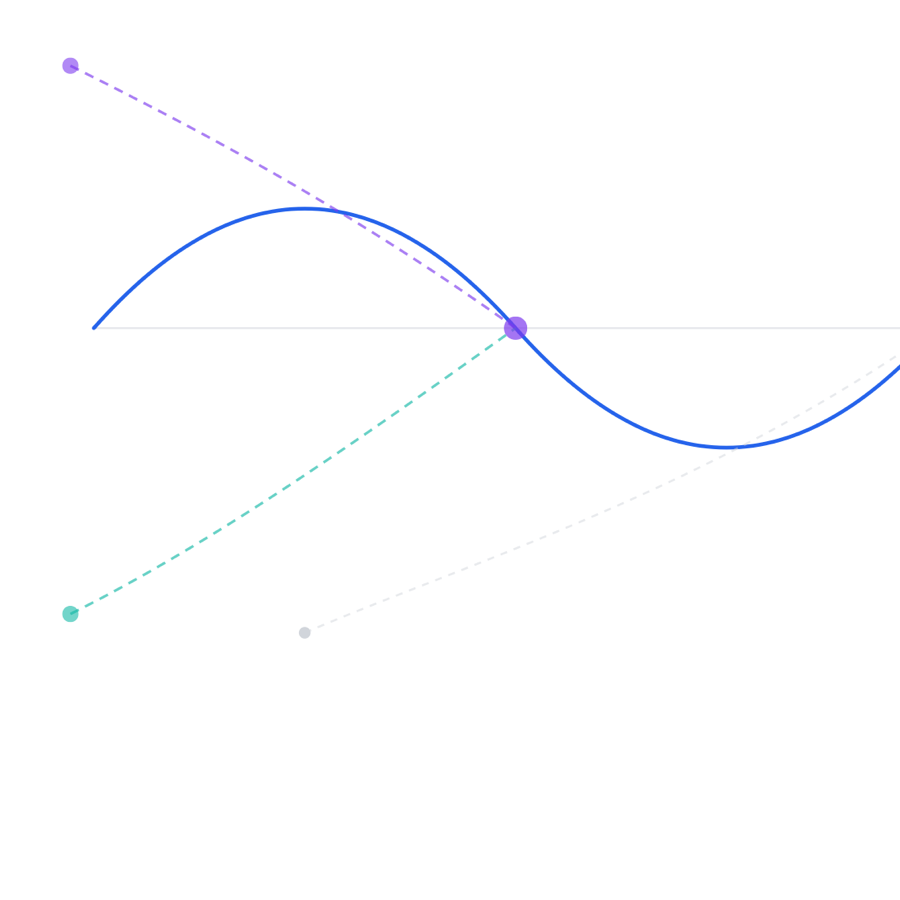
Momentum Trail. Each aligned encounter leaving more behind it than the last.